Death Notice and Obituary
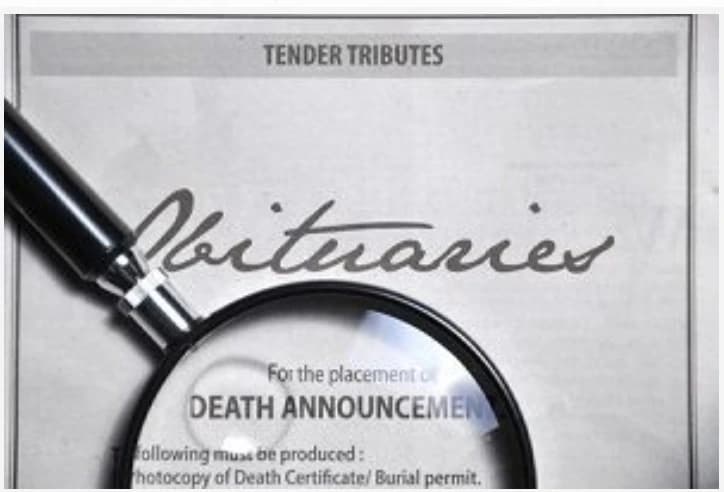
When a loved one passes away, families often need to inform others about the loss. During this emotional time, the terms death notice vs obituary are frequently used, sometimes interchangeably. Yet, they are not the same. Understanding the differences between a death notice vs obituary can help you decide which one best suits your needs.
Additionally, The U.S. Will Registry provides a free obituary section that allows the public to both enter and search for obituaries online. As a result, this feature makes it easier to locate past obituaries and ensure a loved one’s memory is preserved. Furthermore, you can also search for a will or register a will for future reference on The U.S. Will Registry, ensuring that all important documents are accessible when needed.
This guide will explain the key distinctions, provide examples, and offer insights into when and where to publish each type of announcement.
What Is a Death Notice and Obituary?
A death notice is a brief public announcement of someone’s passing. It usually includes essential details such as the person’s name, age, date of death, and funeral or memorial service information. In contrast, an obituary is a more detailed tribute that shares the story of a person’s life, accomplishments, family relationships, and cherished memories. While death notices focus on factual information, obituaries provide a more personal way to honor and remember a loved one.
For families seeking a simple and cost-effective option, The U.S. Will Registry offers free online death notices and obituary postings where applicable. This allows loved ones to share important information, celebrate a life, and create a lasting online memorial without the high cost of newspaper publications. The public can also search posted death notices and obituaries to reconnect with family history or locate information about a loved one.
For more information on how to find missing wills or legal documents after a loved one’s passing, visit How to Locate a Lost Will.
SEARCH OR POST AN OBITUARY or DEATH NOTICE FREE
The U.S. Will Registry National Search
Key Elements of a Death Notice
A standard death notice generally contains:
- The deceased’s full name (including maiden name if applicable).
- Date of birth and date of death.
- The location of passing (optional).
- Surviving family members (optional, but often limited to immediate relatives).
- Funeral or memorial service details.
- A request for donations or flowers (if applicable).
Example of a Death Notice
“Johnathan Robert Smith, 78, of Chicago, IL, passed away on March 12, 2024. A memorial service will be held at St. Mary’s Church on March 16 at 2 PM. In lieu of flowers, donations may be made to the American Cancer Society.”
A death notice is short and straightforward. Specifically, it serves to notify the public, friends, and extended family members of a person’s passing without providing personal stories or life accomplishments.
Standard Elements of an Obituary
An obituary is a detailed and personalized tribute that thoughtfully honors the life of the deceased. Not only does it include essential facts, but it also shares biographical details, accomplishments, and significant memories. Unlike death notices, obituaries go beyond basic information and tell a meaningful story. As a result, they are often written by family members or close friends. In some cases, professional writers craft them to capture the essence of the person’s life.
Additionally, for those wanting an easily accessible obituary, The U.S. Will Registry offers a free obituary section. This platform allows families to both enter and search for obituaries online. Because of this, finding and preserving a loved one’s legacy has never been easier. In fact, this service ensures that memories are not only stored but also easily retrieved whenever needed.
Example of an Obituary
In Loving Memory of Margaret Louise Thompson
Margaret Louise Thompson, 82, of Portland, Oregon, passed away peacefully on June 14, 2025, surrounded by her family. Born on May 2, 1943, in Salem, Oregon, Margaret dedicated her life to her family, her church, and her community.
She was a beloved mother, grandmother, sister, and friend. Margaret spent over 30 years working as a public school teacher, where she inspired hundreds of students with her kindness, patience, and unwavering belief in education. After retirement, she volunteered at the local food bank and mentored young educators through her church outreach programs.
Margaret had a passion for gardening, quilting, and hosting Sunday dinners with her famous peach cobbler. Her home was always open to those in need of comfort, conversation, or a warm meal.
She is survived by her daughters, Emily Harper and Rachel Benson; her grandchildren, Jacob, Lily, and Noah; and her younger brother, James Whitman. She was preceded in death by her husband of 45 years, Harold Thompson.
A celebration of life will be held at Grace Memorial Church in Portland on June 22, 2025, at 11:00 a.m. In lieu of flowers, donations can be made to the Oregon Food Bank or Grace Memorial Youth Education Fund.
Margaret’s legacy of compassion and strength will live on in all who knew and loved her. She will be deeply missed.
Key Differences and When to Use Each
Now that we understand both terms, let’s break down the main differences between a death notice vs obituary.
| Feature | Death Notice | Obituary |
|---|---|---|
| Length | Brief (2-5 sentences) | Detailed (several paragraphs) |
| Purpose | Inform about a person’s passing | Celebrate and honor a person’s life |
| Content | Name, date of death, funeral details | Life story, achievements, legacy |
| Written By | Family or funeral home | Family, friends, or professional writer |
| Where It’s Published | Newspapers, funeral home websites, The U.S. Will Registry | Newspapers, Online Obituary Sites,, Social media |
Post a Death Notice and Obituary Free
While both serve an important purpose, a death notice is primarily factual, whereas an obituary provides a narrative about the person’s life.
Where to Publish an Obituary and Death Notice?
Choosing where to publish is just as important as deciding what to write. Here are some common options.
For a Death Notice
- Local newspapers – Most newspapers have a section dedicated to death notices.
- Funeral home websites – Many funeral homes offer an online obituary service.
- The U.S. Will Registry – Families can post and search for free online death notices, making it easier to find information about lost loved ones.
For an Obituary
- Newspapers (print & digital) – If you want a lasting tribute, some papers allow for longer obituary articles.
- Social media – Many families now share obituaries on Facebook, Instagram, or LinkedIn to reach more people.
- The U.S. Will Registry – Allows families to enter and search for obituaries online for free.
- Memorial websites – Sites like ForeverMissed.com or FindAGrave.com provide space for long-form obituaries.
Final Thoughts: Obituary and Death Notice – Which One Do You Need?
Losing a loved one is never easy, and making decisions during grief can feel overwhelming. At such a difficult time, knowing how to honor their memory can provide comfort. For this reason, understanding the difference between a death notice vs obituary can help you determine what’s best for your family.
A death notice briefly announces a passing, informing friends and relatives about funeral arrangements. In contrast, an obituary offers a more detailed tribute, honoring the person’s legacy and providing comfort to those who knew them.
If you are uncertain, consider using both options—a short death notice in the newspaper and a longer obituary online, where people can share condolences and memories. Furthermore, using The U.S. Will Registry to post a free death notice or obituary ensures accessibility for a wider audience.
Therefore, what matters most is that your loved one’s story is shared and their life is remembered.
Editorial Review:
This article was prepared by estate planning researchers and reviewed by S. Miller and staff. With more than 25 years of experience in estate planning documentation and probate processes, our editorial oversight ensures clarity and accuracy. This content is provided for informational purposes only and does not constitute legal advice.
[View Our Editorial Policy]