

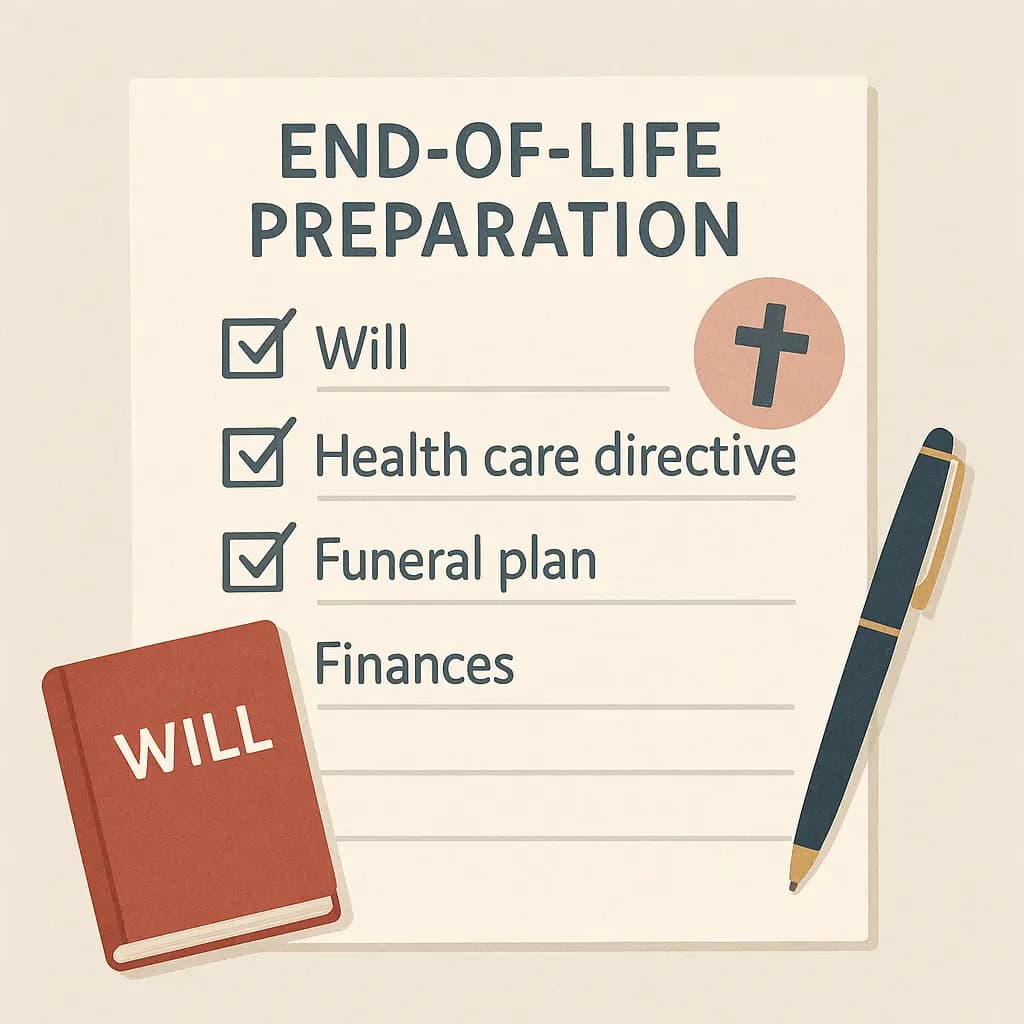
End of life preparation is more than a checklist. It is a thoughtful act of love. When you create a plan, you protect your family from stress and confusion. You also make sure your wishes are honored.
This guide walks you through every step of end of life planning. From medical decisions to burial preferences, you will find peace of mind. You’ll also give your family comfort during a difficult time.
End of life planning involves making clear choices about your final stage of life. It includes health care decisions, legal paperwork, and your memorial wishes.
Without these steps, your family may face chaos. In times of grief, this can make things harder. With a plan in place, your loved ones will know exactly what you wanted.
End of life planning ensures your choices are respected. But more importantly, it protects the people you care about most.
Your family won’t have to guess about your medical care, finances, or funeral. You reduce the chance of conflict. You ease the burden of decision-making during a painful time.
This planning also helps avoid probate delays, reduces costs, and preserves your legacy.
Discussing end of life planning may feel uncomfortable. Yet, open conversations are vital. They help prevent misunderstandings.
Here’s how to approach this sensitive topic:
Speak honestly about your wishes. Make it clear this is about easing their future pain.
Frame the conversation around facts. Talk calmly and without emotion, when possible.
Ask your family to honor your decisions. Let them know this plan reflects your deep care for them.
People react differently. Allow your loved ones time to understand and accept your choices.
Having a doctor explain your health status can help reinforce your message.
Verbal conversations matter. Still, a written plan ensures clarity and prevents conflict.
End of life planning is not one and done. Revisit your decisions yearly and update them as needed.
Use this step-by-step checklist to build a solid plan for your future.
Gather these documents:
A Will is simple and affordable. It outlines asset distribution, funeral preferences, and guardianship. A Living Trust avoids probate and maintains privacy.
Choose a Trust if you:
If you’re thinking about creating a trust, a smart first step is to use a free online will tool to organize your thoughts. Taking this approach lets you carefully consider each part of your will at your own pace—without the pressure of an attorney’s hourly fees. Once you’ve outlined your wishes, you can bring the draft to an attorney for review and legal adjustments. One of the most user-friendly tools available is The U.S. Will Registry’s free online program, which guides you through the process with simplicity and clarity.
Choose a Will if you:
The U.S. Will Registry has the most trusted and user-friendly online will program for free to the public. It remains the most comprehensive due to the ability to offer free registration of a will as well as free iCloud storage.
Include:
Naming beneficiaries clearly helps your executor avoid delays.
You may want to stay at home. Or you may prefer care in a facility. Explore options such as:
Stay in familiar surroundings with support from professional caregivers.
Get help with daily needs in a social environment.
Receive round-the-clock medical care when needed.
Tour locations, ask questions, and weigh costs and benefits. Make sure your comfort and safety are top priorities.
Making these decisions early protects your family from painful choices later. Consider the type of service:
Decide on your preferred burial method:
Include notes on music, readings, or rituals. Prepay if possible to reduce costs later.
Writing your own obituary may seem unusual. Yet it lets you shape how your story is told.
Share:
These tools help simplify your planning process:
Each of these tools makes it easier to protect your legacy and reduce stress.
Preparing for death is hard. But end of life planning is one of the most caring things you can do. It shows deep love and responsibility.
Take it one step at a time. Complete one document, then move to the next. Let your family know where everything is saved. Use secure cloud storage or password-protected files. Register your will to make sure it can always be found.
With your plan in place, your family won’t have to second-guess what you wanted. They will feel supported and guided.
End of life planning gives structure to one of life’s most uncertain moments. With every choice you make, you remove weight from your loved ones’ shoulders.
Talk about your plan. Write it down. Use tools that support clarity and access. Most of all, remember this planning is not about fear. It’s about trust, love, and peace.
Your end of life plan becomes part of your legacy. It’s a final act of care that can bring comfort long after you’re gone.
This article was reviewed for legal accuracy by Shawn Patrick Wolf, Esq. Mr. Wolf is Board Certified in Wills, Trusts and Estates and in Tax Law. He serves on the Board of Directors of the East Coast Estate Planning Council and the Palm Beach Tax Institute.
