
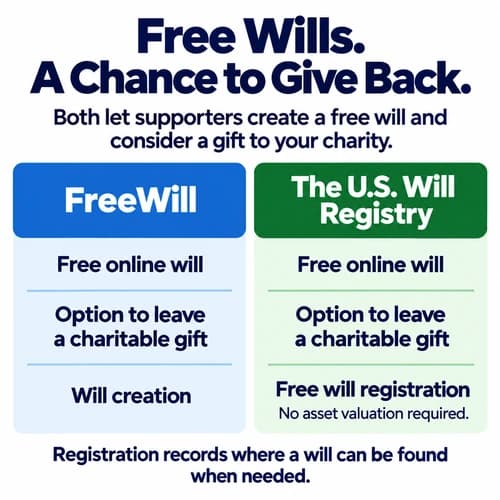
FreeWill and The Planned Legacy Program both help nonprofits generate charitable bequests, but they take different approaches. FreeWill offers a broader planned and non-cash giving platform. The Planned Legacy Program focuses on an affordable, streamlined bequest program for small and midsize nonprofits, including free wills, customized bequest forms, pour-over wills, will registration, and annual update reminders.
The best choice depends on your nonprofit’s goals, budget, and the type of planned giving program it wants to maintain long term.
One of the biggest differences between traditional fundraising and planned giving is how long it can take for a gift to materialize.
A supporter could leave a nonprofit a bequest today, but the organization may not receive that gift for 10, 20, or even 30 years.
That makes long-term affordability especially important.
Large nonprofits may have dedicated planned giving departments and substantial fundraising budgets. However, many small and midsize nonprofits cannot justify a large annual investment while waiting years for future bequests.
The Planned Legacy Program was designed to make planned giving affordable for these organizations.
An affordable program allows a nonprofit to continue promoting legacy giving year after year while gradually building a pipeline of future bequests.
A program a nonprofit can sustain for many years may ultimately be more valuable than a more expensive program it can only afford for a short period.
FreeWill provides a broader planned giving platform that includes several types of planned and non-cash giving.
That approach may work well for larger organizations seeking multiple fundraising tools within one platform.
The Planned Legacy Program takes a more focused approach.
Its primary goal is helping supporters complete their estate plans while giving them a simple opportunity to remember the nonprofit in their wills.
This difference is intentional. The Planned Legacy Program does not want someone creating a will to become sidetracked by the technical details involved with stocks, Bitcoin, or other non-cash gifts. However, it does not ignore those opportunities.
During the process, supporters can indicate whether they would like the nonprofit to contact them about non-cash giving.
The supporter can therefore finish the will without navigating additional financial details. Meanwhile, the nonprofit can follow up separately with supporters interested in other types of charitable gifts.
This keeps the will-writing process simple without losing potential fundraising opportunities.
The Planned Legacy Program provides several features designed specifically around will-based planned giving.
Wills created through the program can be registered with The U.S. Will Registry at not cost.
Registration creates a record of the existence and location of the will so that information can be found when the document is eventually needed.
FreeWill does not provide will registration. Registration helps ensure that your will is found when needed. This is essential to having true peace of mind.
The Planned Legacy Program provides annual reminders encouraging supporters to review their estate plans.
This helps supporters keep their wills current. It also creates another opportunity to consider adding or changing a charitable bequest.
The Planned Legacy Program includes a Pour-Over Will Program for supporters whose estate plans involve living trusts.
FreeWill does not offer a Pour-Over Will Program as part of its nonprofit will service.
Not every supporter needs a new will.
Some of a nonprofit’s most loyal donors may already have estate plans.
The Planned Legacy Program provides customized bequest forms so participating nonprofits can also reach supporters who already have wills.
This expands the nonprofit’s planned giving opportunity beyond people who use the online will maker.
Creating a will already requires several important decisions.
Supporters must consider beneficiaries, personal representatives, property, guardians when applicable, and other final wishes.
Adding detailed explanations about securities, cryptocurrency, and other financial transactions can introduce more decisions.
The Planned Legacy Program intentionally separates those conversations.
First, help the supporter complete the estate plan and consider a charitable bequest. Then, if the supporter expresses interest in other forms of giving, allow the nonprofit to follow up personally.
For a nonprofit focused on charitable bequests, completing the will should remain the primary objective.
For nonprofits primarily interested in generating charitable bequests, The Planned Legacy Program may be the more practical choice because it combines affordability with a focused set of estate-planning and bequest tools.
Small and midsize nonprofits can offer supporters:
Most importantly, the organization can maintain the program at an affordable cost while waiting for future bequests to mature.
FreeWill may be a better fit for organizations seeking a broader planned and non-cash giving platform.
Larger nonprofits may actively pursue stocks, cryptocurrency, donor-advised funds, and other charitable assets. They may also have development staff dedicated to managing these different giving opportunities.
For those organizations, a broader platform can make sense.
However, more fundraising features do not automatically make a program better for every nonprofit.
A smaller organization primarily interested in charitable bequests should consider whether it needs those additional capabilities and whether the ongoing investment makes sense.
Choose the program that matches your nonprofit’s actual fundraising needs and budget.
FreeWill may be a strong choice for organizations wanting a broad planned and non-cash giving platform.
The Planned Legacy Program may be a stronger fit for small and midsize nonprofits seeking an affordable program focused on generating charitable bequests.
Its approach is deliberately simple: help supporters complete their wills, make charitable bequests easy to consider, provide options for people who already have wills, register completed wills, and continue the relationship through annual reminders.
It also identifies supporters interested in non-cash giving without requiring them to navigate those details while creating their wills.
That approach recognizes one of the most important realities of planned giving:
A bequest generated today may not reach the nonprofit for many years.
Therefore, the best planned giving program is not necessarily the one with the most features. For many nonprofits, it is the program they can afford, promote consistently, and maintain long enough for today’s bequest commitments to become tomorrow’s charitable gifts.
Yes. Both programs help nonprofits encourage charitable bequests. FreeWill offers a broader fundraising platform, while The Planned Legacy Program focuses on affordable, will-based planned giving.
Yes. Wills can be registered with The U.S. Will Registry so information about their existence and location can be found when needed.
Yes. Customized bequest forms allow participating nonprofits to reach supporters who already have estate plans and may want to include the organization in their legacy giving.
Yes. Supporters can indicate that they would like the nonprofit to contact them about non-cash giving. The technical details are intentionally kept outside the will-writing process so supporters can remain focused on completing their estate plans.
This article was reviewed for legal accuracy by Shawn Patrick Wolf, Esq. Mr. Wolf is Board Certified in Wills, Trusts and Estates and in Tax Law. He serves on the Board of Directors of the East Coast Estate Planning Council and the Palm Beach Tax Institute.
