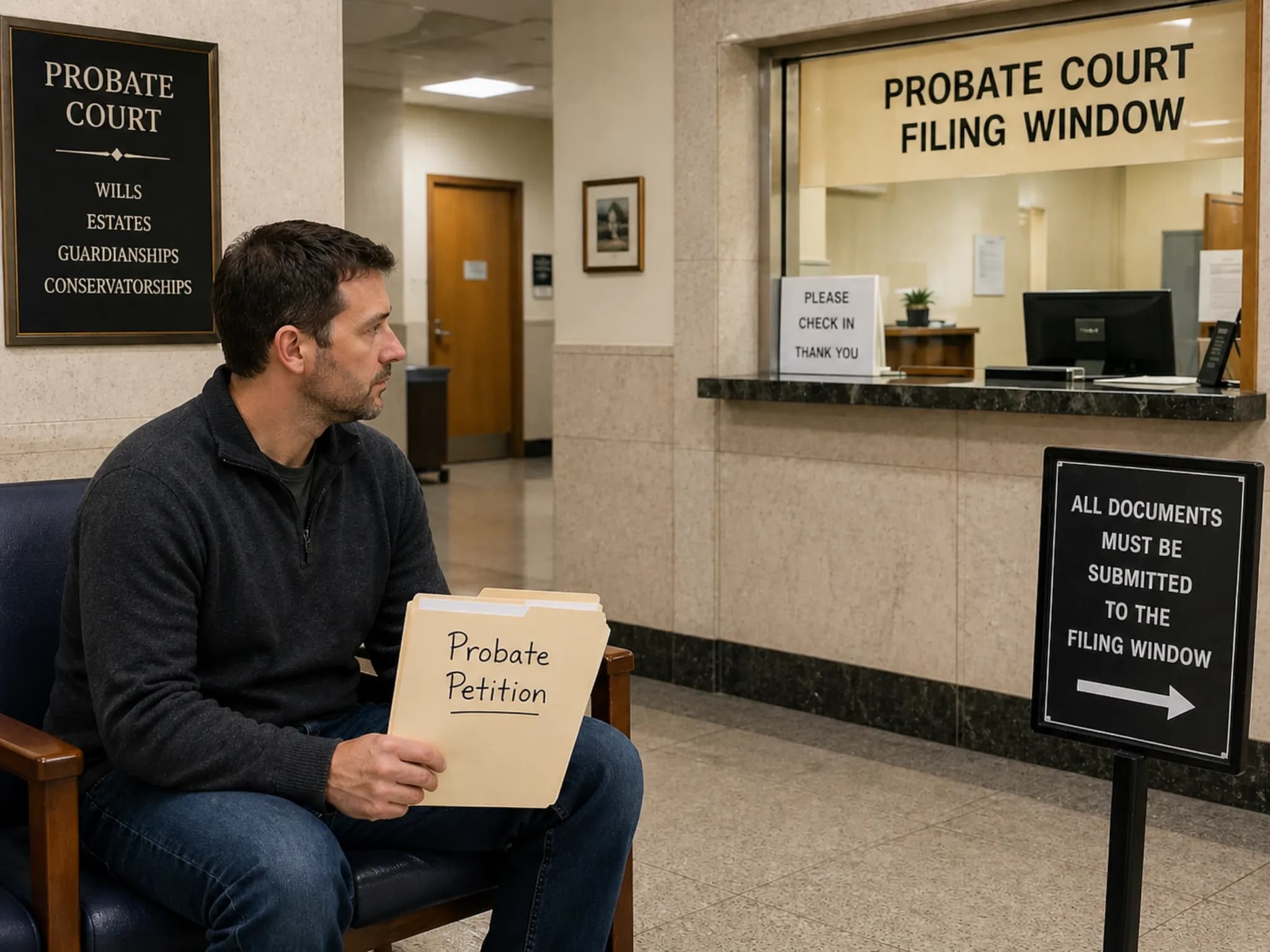
How to file a probate petition begins with submitting a formal request to the probate court to open an estate and obtain legal authority to act. This filing asks the court to appoint an executor or administrator and provides required details about the deceased, heirs, and assets. Without an approved petition, no one can legally access accounts, transfer property, or manage the estate.
Courts rely on this filing to confirm jurisdiction and ensure the estate is handled under state law. Filing the petition correctly allows the court to issue authority without delay, while incomplete or incorrect filings often result in rejection or delays.
This guide explains the exact steps, required documents, and where to file so the probate process can begin efficiently and in compliance with court requirements.
To understand how long each stage may take, read: Probate Timeline After Filing a Petition.
Steps to File a Probate Petition
Filing a probate petition involves several required steps. Each step must be completed accurately to avoid delays or rejection by the court.
1. Gather Required Documents
Most courts require a certified death certificate, the original will if one exists, and basic information about heirs and assets.
2. Determine the Correct Court
The petition must be filed in the probate court located in the county where the deceased legally resided. Filing in the wrong jurisdiction will delay the process.
3. Complete the Probate Petition Forms
Each state provides specific forms that must be completed with accurate estate information. Missing or incorrect details often result in rejection.
4. File the Petition With the Court
The completed petition and supporting documents must be submitted to the probate court clerk. Filing fees are typically required.
5. Await Court Approval and Appointment
Once reviewed, the court will appoint an executor or administrator and issue legal authority to begin managing the estate.
Documents Needed to File a Probate Petition
Courts require specific documentation to process a probate petition. Submitting complete and accurate documents helps avoid delays.
Most filings require:
- Certified death certificate
- Original will, if one exists
- Names and contact information of heirs
- Estimated list of estate assets
Additional documents may be required depending on state law and the complexity of the estate.
What a Probate Petition Does
A probate petition asks the court to recognize the estate and appoint a legal representative. The appointed representative manages the estate under court supervision.
The petition provides basic facts. These include the date of death, known heirs, and estimated assets. The court uses this information to decide how probate should proceed.
Once the court approves the petition, it issues formal authority. This authority allows estate administration to begin.
Where to File a Probate Petition
A probate petition must be filed in the probate court located in the county where the deceased person legally resided at the time of death. Probate courts use residency to determine jurisdiction over the estate.
If the deceased owned property in another state, a second proceeding called ancillary probate may be required in that state. However, the primary probate case still begins in the county of residence.
Courts typically require several documents when filing the petition. These may include a certified death certificate, the original will if one exists, and basic information about heirs and estate assets.
Filing the petition in the correct jurisdiction ensures the court has legal authority to appoint the executor or administrator and begin estate administration.
Petitioning Probate When a Will Exists
When a will exists, the probate petition asks the court to admit the will. It also asks the court to appoint the executor named in the document. The court reviews the will for legal compliance. It checks signatures, witnesses, and execution requirements. After approval, the executor gains authority to act.
The executor identifies assets, notifies heirs and creditors, pays debts and taxes, and distributes property. The court oversees each step to ensure compliance.
Probate Petition When No Will Is Found
When no will is found, a probate petition is still required. In this situation, the petition asks the court to appoint an administrator.
State intestacy laws then control the estate. These laws prioritize spouses and blood relatives. They often exclude stepchildren, unmarried partners, friends, and charities. This result surprises many families. Personal wishes do not control without a will.
Filing a Petition for Probate Before a Will Is Located
Families sometimes file probate before locating a will. Courts allow this, but problems can arise if a newer will appears later. Because of this risk, representatives should make every effort to locate the most recent will before assets are distributed.
FIND A MISSING WILL | The U.S. National Will Registry
When a Probate Petition Should Be Filed
A probate petition should be filed as soon as possible after death to begin the legal process. Filing the petition early allows the court to review the case and issue authority to act on behalf of the estate.
Delays in filing a probate petition can freeze bank accounts, delay insurance claims, and leave property unsecured. Without court approval, no one has legal authority to manage estate assets.
Filing the petition promptly helps protect estate property, reduces the risk of misuse, and allows the probate process to move forward without unnecessary delays.
Who Has the Right to File a Probate Petition
State law controls who may file a probate petition. When a will exists, the named executor usually has priority.
When no will exists, the court follows a legal order. A surviving spouse often comes first. Adult children usually follow. Other heirs may qualify if closer relatives do not act.
If multiple people share equal priority, conflicts may arise. The court may require hearings before making an appointment.
Information Required to File a Petition for Probate
A probate petition must include complete and accurate details. Courts rely on this filing to manage the estate correctly.
Most petitions require the deceased person’s legal name and date of death. They also require heir information and asset estimates.
Missing or incorrect information often delays approval. Courts may reject petitions that lack required details.
What Happens After the Probate Petition Is Approved
- After approval, the court issues legal authority. This authority allows the executor or administrator to act.
- The representative must notify heirs and creditors. Most states set strict deadlines for notice. Missing deadlines can cause penalties or delays.
- The representative must also prepare an asset inventory. This document lists property and accounts owned at death. The court reviews it for accuracy.
To understand how long each stage of the probate process typically takes after a petition is approved, read: Petition for Probate: Understanding the Probate Timeline.
Common Probate Mistakes
Many probate cases stall because of avoidable errors.
- Incomplete filings cause rejection.
- Incorrect heir information creates disputes.
- Failure to notify heirs properly is another common issue.
- Improper notice can force the court to restart parts of the process.
- Distributing assets too early also causes problems.
Courts require approval before final distributions.
How Probate Petitions Protect Executors and Administrators
A probate petition protects the person managing the estate. Court authority allows lawful action. This protection matters when disputes arise.
Without court approval, representatives risk personal liability. Creditors or heirs may challenge unauthorized actions. Court oversight also creates transparency. Every major step is documented and reviewed.
Why Courts Require Probate Procedures
Probate affects property rights and inheritance. Courts require structure to prevent abuse and confusion.
The probate petition ensures the court knows who died and who may inherit. It also confirms who manages the estate.
This process prevents fraud and competing claims. It creates order during a difficult time.
When Probate Is Required for Small Estates
Some estates qualify for simplified procedures. However, probate may still apply. Real estate often triggers probate.
Bank policies also influence the process. Some institutions require court authority regardless of account size.
Filing a probate petition confirms which rules apply. It prevents assumptions that cause delays.
Final Takeaway
A probate petition forms the foundation of estate administration. It allows the court to appoint a representative and supervise the process.
Whether a will exists or not, the probate petition allows the estate to move forward. Filing it correctly reduces delays, disputes, and legal risk. Understanding this step helps families act with clarity and confidence.
SEARCH FOR A WILL
The U.S. Will Registry