
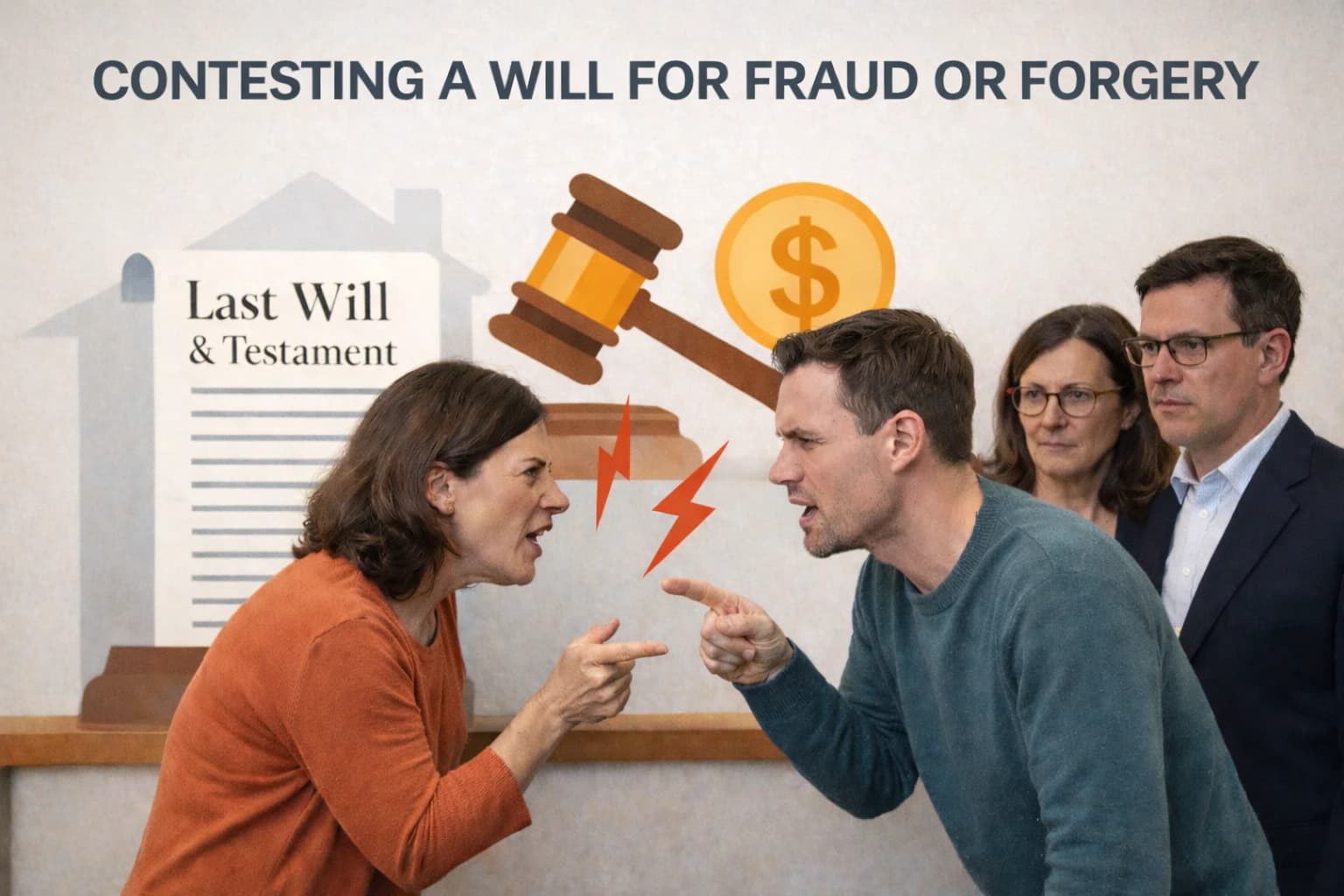
Contesting a will for fraud or forgery is necessary when a document appears altered, falsified, or manipulated and does not reflect a loved one’s true intentions.
Fraud or forgery of a will occurs when a document is intentionally changed, falsified, or misrepresented so it does not reflect the true wishes of the person who created it. These claims are reviewed in probate court and must meet strict legal standards.
Suspecting fraud or forgery of a will can create confusion, stress, and urgency during an already difficult time. However, understanding what to look for and how to respond can protect your rights and ensure the estate is handled correctly.
When a will does not seem authentic or appears manipulated, it is critical to act quickly. Following a structured process helps you determine whether legal action is appropriate and what steps to take next.
Before taking action, it is important to confirm you have the most recent valid will, as a newer version may exist. Learn where to begin your search: How to Find a Will: The Complete Authority Guide.
Fraud in a will occurs when someone intentionally deceives the person creating the will or manipulates information to influence its contents. Forgery, on the other hand, involves falsifying a signature or altering the document without authorization. Both situations raise serious legal concerns and can invalidate a will entirely.
Fraud may involve misleading the testator about beneficiaries, assets, or consequences. Forgery often involves fake signatures, altered pages, or unauthorized changes after the will was signed.
Recognizing early warning signs is essential. While not every irregularity proves wrongdoing, certain patterns should raise concern.
If the signature looks different from known examples, this may indicate forgery. Compare it with previous documents such as checks, contracts, or earlier wills.
A will that drastically changes beneficiaries or distributions without explanation may suggest manipulation or deception.
If pages are missing, fonts differ, or formatting changes mid-document, the will may have been altered.
Most states require witnesses during signing. If witnesses are missing, unavailable, or unclear about the process, the will’s validity may be questioned.
If one person controlled the process, limited access to the deceased, or benefited significantly, fraud or undue influence may be involved.
Fraud and forgery often occur when someone sees an opportunity to gain financially. This can happen in situations involving:
In many cases, the person committing fraud builds trust over time, then takes advantage of the situation.
Taking the right steps early can protect the estate and prevent further complications.
If something feels wrong, investigate further. Delays can weaken your ability to challenge the will.
Collect anything that helps establish a pattern, including:
These documents can help identify inconsistencies.
Others may have noticed similar issues. Shared observations can strengthen your understanding of the situation.
Before taking legal action, it is important to confirm whether a more recent will exists. Many disputes arise because families rely on outdated or incomplete documents.
The U.S. Will Registry was created to help families locate where a loved one’s will was stored or identify the attorney who drafted it, so probate can proceed according to the deceased’s wishes.
Find a Missing Will.
This step can prevent unnecessary disputes and ensure the correct document is used.
An experienced probate attorney can evaluate whether fraud or forgery is likely. They will review evidence, explain your rights, and guide you through the legal process.
If the person was isolated from family or longtime advisors before the will was changed, this may indicate manipulation.
Look for:
Significant changes made shortly before death, especially during illness or decline, can raise concerns about fraud or undue influence.
Examples:
If you need to dispute a will for fraud or forgery, you must present strong evidence. Courts do not invalidate wills without clear justification. Common forms of proof include:
Experts compare signatures and writing styles to determine authenticity.
Witnesses describe what happened during the signing process and whether it followed legal requirements.
These records help determine whether the person had the mental capacity to understand the will.
Experts analyze ink, paper, and formatting to detect alterations or inconsistencies.
Emails, messages, and notes may reveal intent, pressure, or deception.
Each piece of evidence builds a case that the will does not reflect the true intentions of the deceased.
If the court determines that fraud or forgery occurred, the will may be declared invalid. The court will then decide how to distribute the estate.
Possible outcomes include:
The goal is always to ensure the estate reflects lawful and legitimate intentions.
Suspecting fraud or forgery is not just a legal issue, it is also emotional. Families often struggle with:
Disputing a will can strain relationships. However, protecting a loved one’s true wishes is often worth the effort.
Many people feel unsure whether they have enough proof. Attorneys help gather and evaluate evidence.
Legal disputes can be expensive. However, early resolution through negotiation or mediation can reduce costs.
Probate law is complex. Without guidance, families may feel overwhelmed or make costly mistakes.
Every state has strict deadlines for contesting a will. Missing these deadlines can prevent you from taking action, even if fraud or forgery is obvious.
Additionally, evidence can become harder to obtain over time. Witnesses may forget details, and documents may be lost. Acting quickly improves your chances of building a strong case.
Contesting a will for fraud or forgery of a will is serious, but it is not uncommon. By recognizing warning signs, gathering evidence, and taking prompt action, families can protect their inheritance and ensure the estate reflects the true intentions of their loved one. With the right approach and legal support, it is possible to resolve disputes and move forward with clarity and confidence.
Contesting a will for fraud or forgery means challenging a document that appears altered, falsified, or manipulated. It involves proving that the will does not reflect the true intentions of the deceased. Courts require strong evidence, such as signature analysis or witness testimony, before invalidating a will based on fraud or forgery claims.
To prove fraud or forgery when contesting a will, you must present clear and convincing evidence. This may include handwriting analysis, medical records, witness testimony, and document examination. Courts carefully review all evidence to determine whether the will was altered, falsified, or improperly influenced before making a legal decision.
Common signs include unusual signature differences, missing pages, inconsistent formatting, or sudden changes in beneficiaries. Additionally, involvement of a suspicious individual or lack of proper witnesses may raise concerns. While these signs do not prove fraud or forgery alone, they justify further investigation when contesting a will.
If contesting a will for fraud or forgery is successful, the court may declare the will invalid. The estate may then be distributed under a previous valid will or according to state intestacy laws. In some cases, only fraudulent sections are removed, while valid portions of the will remain enforceable.
This article was reviewed for legal accuracy by Shawn Patrick Wolf, Esq. Mr. Wolf is Board Certified in Wills, Trusts and Estates and in Tax Law. He serves on the Board of Directors of the East Coast Estate Planning Council and the Palm Beach Tax Institute.
