
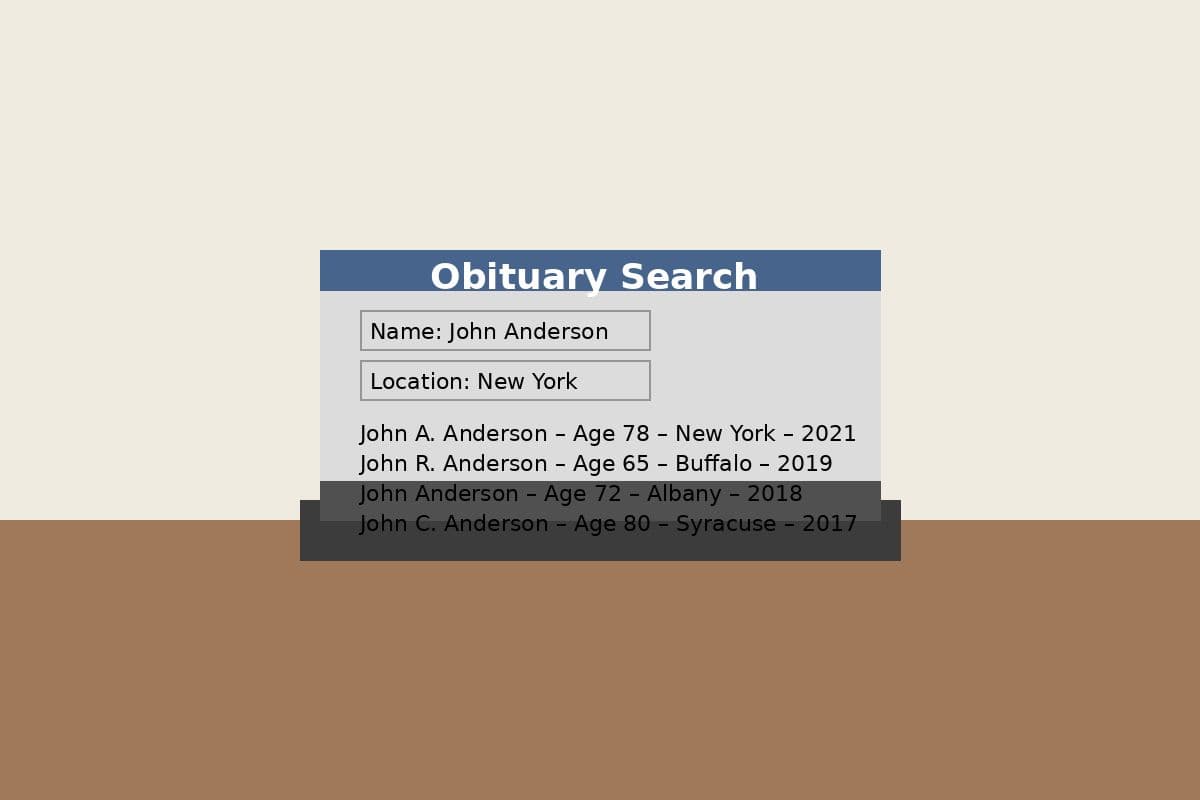
Finding an obituary without knowing the date of death is possible using name-based obituary search systems and identifying details such as location, relatives, or age. Many obituary databases match records using the person’s first and last name, so an exact date of death is not required to locate a potential match.
This situation is common because many people know the person’s name and the city where they lived but do not know the exact date the individual passed away. When the date is unknown, the best approach is to start with the person’s full name and review possible matches returned by obituary search systems.
Users can then confirm the correct obituary by comparing details such as the city where the person lived, relatives listed in the obituary, or the person’s age.
For a complete guide explaining where obituary records are published and the many places they may appear online, see the pillar article Find an Obituary for a Specific Person.
FIND OR PUBLISH AN OBITUARY FREE
The U.S. Will Registry National Search
It is very common for families, friends, or researchers to know that someone passed away but not know the exact date.
This happens for several reasons. Sometimes relatives live in different states and receive the news long after the death occurred. In other situations, families lose contact with extended relatives and only discover the death years later.
Additionally, when searching for distant relatives or researching genealogy, the only information available may be the person’s name and where they once lived.
Because of these situations, obituary search systems cannot rely solely on the date of death. If the date were required to perform a search, many people would never be able to locate obituary records.
Modern obituary databases often match records using a person’s name rather than requiring an exact date of death.
This design recognizes that the public frequently does not know the precise date someone passed away. Instead of blocking the search, these systems allow users to review potential matches and confirm the correct record using other identifying information.
For example, users can compare:
These identifying details allow users to confirm the correct obituary even when the date of death is unknown.
Name-based searches are the most effective way to begin when the date of death is unknown.
Instead of searching by date, users begin by entering the individual’s first and last name. The search system then returns possible matches.
From there, users review the results and determine which record matches the person they are searching for.
Many obituary search platforms rely on this method because it reflects how people actually search for records.
If obituary databases required an accurate date of death in order to perform a search, many families would be unable to locate obituary records.
The public often remembers the name of the person and where they lived, but not the exact date the individual passed away.
Because of this, modern obituary search systems focus on identifying individuals by name first. The user can then review potential matches and confirm the correct record using additional details.
This approach makes obituary searches far more practical for the public.
Another challenge occurs when the date of death is known but entered incorrectly.
Even a small error in the year or month can prevent a record from appearing in search results if the database requires an exact match.
For this reason, search systems that do not require an exact date are often more effective. They allow the user to identify possible matches and then confirm the correct record manually.
The U.S. Will Registry provides obituary and death notice records that can be searched using the individual’s first and last name. An exact date of death is not required to perform a search.
This system was designed with the understanding that many people do not know the precise date someone passed away. Requiring an exact date would prevent many families from locating obituary records.
By allowing name-based searches, users can review possible matches and identify the correct record using other information such as location or family members listed in the obituary.
Once possible matches appear in search results, the next step is confirming which obituary belongs to the correct person.
Most obituaries contain identifying information that helps verify the record.
Important details to compare include:
the city where the person lived
names of relatives listed in the obituary
age or birth year
community organizations or career information
When several of these details match, it becomes easier to confirm the obituary belongs to the correct individual.
When the date of death is unknown, a structured search method produces the best results.
Start with the person’s full name and review possible matches returned by name-based search systems. Then compare details such as location, relatives, and age to identify the correct record.
This approach allows families to locate obituary records even when important information, such as the exact date of death, is missing.
Learning how to find an obituary without knowing the date of death requires understanding how obituary search systems identify records. Because many platforms match records using the person’s name rather than requiring an exact date, it is often possible to locate the correct obituary by reviewing identifying details.
Using name-based search tools and confirming results through additional information allows families to locate obituary records even when the precise date of death is unknown.
For a complete step-by-step guide explaining where obituaries are published and the best places to search for them, see the pillar article Find an Obituary for a Specific Person.
Yes. It is often possible to find an obituary without knowing the exact date of death. Many obituary search platforms match records using the person’s first and last name rather than requiring an exact death date. After the results appear, you can confirm the correct obituary by comparing details such as the city where the person lived, relatives listed, or the age of the deceased.
You can still find an obituary for a specific person by using name-based search systems. Start by entering the person’s full name in an obituary database and review the results. Then compare identifying details such as the city where the person lived, relatives mentioned in the obituary, or the person’s age to confirm which record belongs to the correct individual.
Many people search for an obituary long after a person has passed away. Sometimes family members live in different states and only learn about the death later. In genealogy research, the only information available may be the person’s name and the place where they once lived. Because of this, obituary search systems cannot rely only on the date of death.
Modern obituary databases are designed to help users find an obituary for a specific person even when the date of death is unknown. These systems typically identify records using the individual’s name first. After possible matches appear, users can review details such as location, relatives listed in the obituary, and age to confirm the correct record.
This article was prepared by estate planning researchers and reviewed by S. Miller and staff. With more than 25 years of experience in estate planning documentation and probate processes, our editorial oversight ensures clarity and accuracy. This content is provided for informational purposes only and does not constitute legal advice.
[View Our Editorial Policy]