

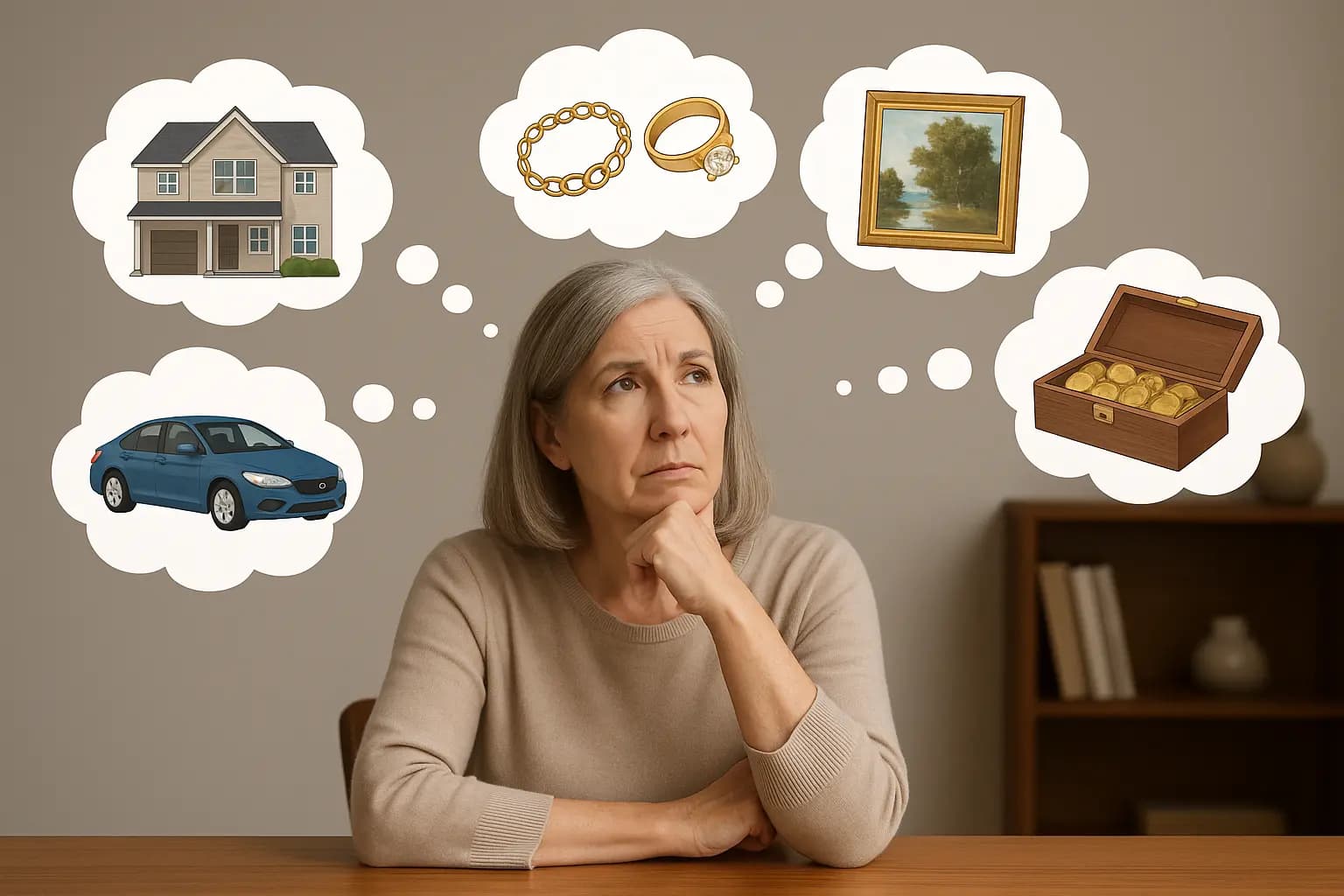
How to divide assets in a will takes careful consideration when making a will. You want to be fair, clear, and thoughtful about who receives what. Each item—whether financial or sentimental—can carry deep meaning, so planning ahead helps avoid confusion and conflict later on.
You may already have someone in mind to inherit your most cherished belongings. Perhaps you want to leave your home to your firstborn. Maybe you hope to secure your grandchild’s college education. A well-written will allows you to clearly outline who should receive what, and when.
Before you divide anything, begin by listing all your assets. Include physical property like your home, car, and family heirlooms. Also note financial assets such as savings accounts, retirement funds, stock options, and life insurance policies. Many people wrongly assume they must be wealthy to need a will. In truth, it’s often sentimental items, the most personal to you, that cause the most family disputes.
For example, a mother’s wedding ring or a treasured photo album might create conflict among children. These items can carry more emotional weight than money. That’s why even modest estates deserve a thoughtful plan.
When you think about how to divide assets in a will, remember that some items are better suited for certain people. Your daughter may cherish the painting your mother made. Your son may appreciate inheriting your car. Meanwhile, your vacation home might hold shared memories for all your children.
If you want to leave a home or property to more than one person, consider how they get along. Joint ownership works best when everyone can communicate and collaborate. If your children don’t agree, the property may become a source of stress—or even a lawsuit.
To avoid future complications, be specific. For example: “I leave my home located at 123 Main Street to my son, Alex Johnson.” This clear statement prevents confusion and strengthens your will’s validity in probate.
Not everyone has children, close family, or obvious heirs. If you don’t have direct beneficiaries, this is a perfect opportunity to consider leaving a legacy to a nonprofit organization. You can support causes that reflect your values—education, animal welfare, community health, or housing, for instance.
The U.S. Will Registry’s free online will program includes a simple section to designate a nonprofit as a beneficiary. This makes it easy for anyone to include a charitable gift in their estate plan.
If you’re ready to create your will, you may use The U.S. Will Registry’s free portal.
WRITE YOUR WILL NOW
The U.S. Will Registry – IT’S FREE!
Here are some helpful strategies to divide your estate with fairness and clarity:
If more than one person will inherit the same property, spell out how they’ll share it. For example, “I leave my home at 456 Oak Drive jointly to my sons, Mark and James, with equal ownership.”
You may also want to include language allowing them to sell the property and divide the proceeds. This flexibility can reduce future tension.
When one child wants the home but others do not, consider adjusting other inheritances. For instance, Tom gets the house, while Ann and Sara receive assets of equal value—like savings, stock, or life insurance.
While planning how to divide assets in a will, consider whether your chosen heirs can afford to manage what they inherit. A house, for example, comes with property taxes and upkeep. If your loved one is not in a financial position to maintain it, your gift may become a burden.
In these cases, it might be better to arrange for the property to be sold, with proceeds split among beneficiaries. Or, you might leave it to the person best equipped to manage the responsibility.
Probate is the legal process of distributing your estate after your death. This includes:
Because all wills go through probate, being clear in your directions helps reduce delays. A vague or contested will could extend the probate process for months or even years.
When naming beneficiaries in your will, always:
This attention to detail ensures your assets are passed down exactly as you intend. To read in more detail how to choose a beneficiary, Click Here.
Don’t forget to include small but meaningful items. Jewelry, collectibles, personal letters, or artwork often carry immense emotional value. Be detailed. A note like: “I leave my grandmother’s locket to my niece Emily” adds clarity and avoids future arguments.
Sometimes, the person you plan to leave an item to may pass away before you. Or, they may not want the item. Always list secondary choices or instructions. For example: “If Emily does not survive me, I leave the locket to my sister Rachel.”
This ensures that every asset has a home.
Whether your estate is simple or complex, planning ahead offers peace of mind. If you’re ready to outline your wishes, you can begin now with a secure, online option.
For more complex estates, creating a will online allows you to take your time and think carefully about important decisions—like who should serve as your primary or secondary executor, or who would care for your pets. These are thoughtful choices best made without the pressure of sitting in front of an attorney.
Once your online will is complete, you can always bring it to an attorney for review if you believe your situation requires additional legal guidance.
The U.S. Will Registry makes it easy to document your assets, name beneficiaries, and even leave a charitable legacy. Their program is attorney-created and trusted by families across the country.
Dividing your assets in a will isn’t just about passing things on. It’s about preserving family harmony, honoring your intentions, and securing your legacy. Whether you’re giving a home, a ring, or a heartfelt donation to a nonprofit, every decision matters.
With thoughtful planning and the right tools, you can make sure your legacy is both lasting and meaningful.
This article was reviewed for legal accuracy by Shawn Patrick Wolf, Esq. Mr. Wolf is Board Certified in Wills, Trusts and Estates and in Tax Law. He serves on the Board of Directors of the East Coast Estate Planning Council and the Palm Beach Tax Institute.
