
How to Post a Death Notice begins with gathering accurate information about the deceased, confirming funeral arrangements, and choosing where to publish the announcement. A well-written death notice informs family, friends, and the community of a person’s passing while providing funeral or memorial service details. Families can publish death notices in newspapers, funeral home websites, online memorial platforms, and free nationwide services such as The U.S. Will Registry.
Posting a death notice is often one of the first responsibilities families face after the loss of a loved one. The purpose of a death notice is to notify relatives, friends, coworkers, neighbors, and the community of the passing while providing the details needed to attend funeral or memorial services. Unlike an obituary, which tells the story of a person’s life, a death notice focuses on communicating timely information.
Most families publish a death notice after funeral arrangements have been confirmed, usually within 24 to 72 hours after the death. If arrangements change, update online notices as soon as possible.
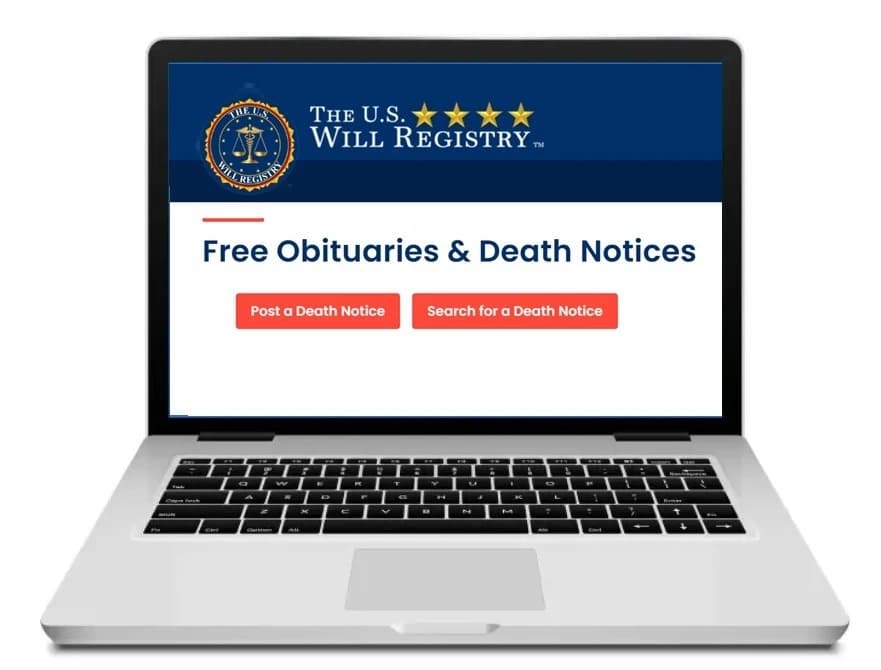
Newspapers often charge publication fees based on length. Funeral homes may include online publication with their services. The U.S. Will Registry offers free nationwide death notice publication.
The U.S. Will Registry | Established 1997
POST OR SEARCHDEATH NOTICE AND OBITUARYFree
Before writing the notice, gather all of the information you plan to publish.
Confirm all names, dates, times, and addresses before publishing.
Choose one or more publication locations.
Local newspapers
Funeral home websites
Church bulletins
Community organizations
Social media
Online memorial platforms
The U.S. Will Registry
Publishing in more than one location helps ensure everyone receives the announcement.
Keep the wording respectful, accurate, and concise. Include the announcement of the death, funeral or memorial arrangements, visitation information when applicable, memorial donation requests, and a brief closing message from the family.
Sample:
John A. Smith, age 78, passed away peacefully on June 15, 2026. Visitation will be held Friday, June 19, from 5:00 p.m. until 8:00 p.m. at Smith Funeral Home. Funeral services will be held Saturday, June 20, at 10:00 a.m. at First Baptist Church. In lieu of flowers, memorial donations may be made to the American Cancer Society.
Review the notice carefully before submitting it.
Verify spelling of names
Funeral dates
Service times
Addresses
Funeral home information
Donation information
Website links
Telephone numbers
Ask another family member to proofread the notice.
The common mistakes to avoid:
A death notice announces the passing and service information. An obituary provides a more detailed tribute to the person’s life, accomplishments, family, and legacy.
Read in detail The Difference Between a Death Notice and Obituary
Following these steps helps families publish an accurate and respectful death notice while ensuring the community receives important funeral information. For a free nationwide option, families can publish death notices through The U.S. Will Registry.
To post a death notice, first gather accurate information about the deceased and confirm funeral arrangements. Next, write a clear and respectful announcement, choose where to publish it, and review it carefully before submission. Families often publish death notices in newspapers, funeral home websites, online memorial platforms, and nationwide services such as The U.S. Will Registry.
The cost of posting a death notice depends on where it is published. Newspapers often charge based on the length of the notice, while many funeral homes include online publication with their services. Some online memorial websites charge fees, but free nationwide publication is available through The U.S. Will Registry.
There is no single official location where all death notices are published. Families commonly post them in local newspapers, funeral home websites, church bulletins, online memorial platforms, and social media. Many also use nationwide services such as The U.S. Will Registry to help relatives and friends in other locations find funeral information.
Before posting a death notice, gather the deceased’s full name, date of death, funeral home information, visitation details, funeral or memorial service location, dates and times, burial or cremation information, and memorial donation requests if applicable. Verifying these details before publication helps ensure the announcement is accurate and complete.
This article was reviewed for legal accuracy by Shawn Patrick Wolf, Esq. Mr. Wolf is Board Certified in Wills, Trusts and Estates and in Tax Law. He serves on the Board of Directors of the East Coast Estate Planning Council and the Palm Beach Tax Institute.
