
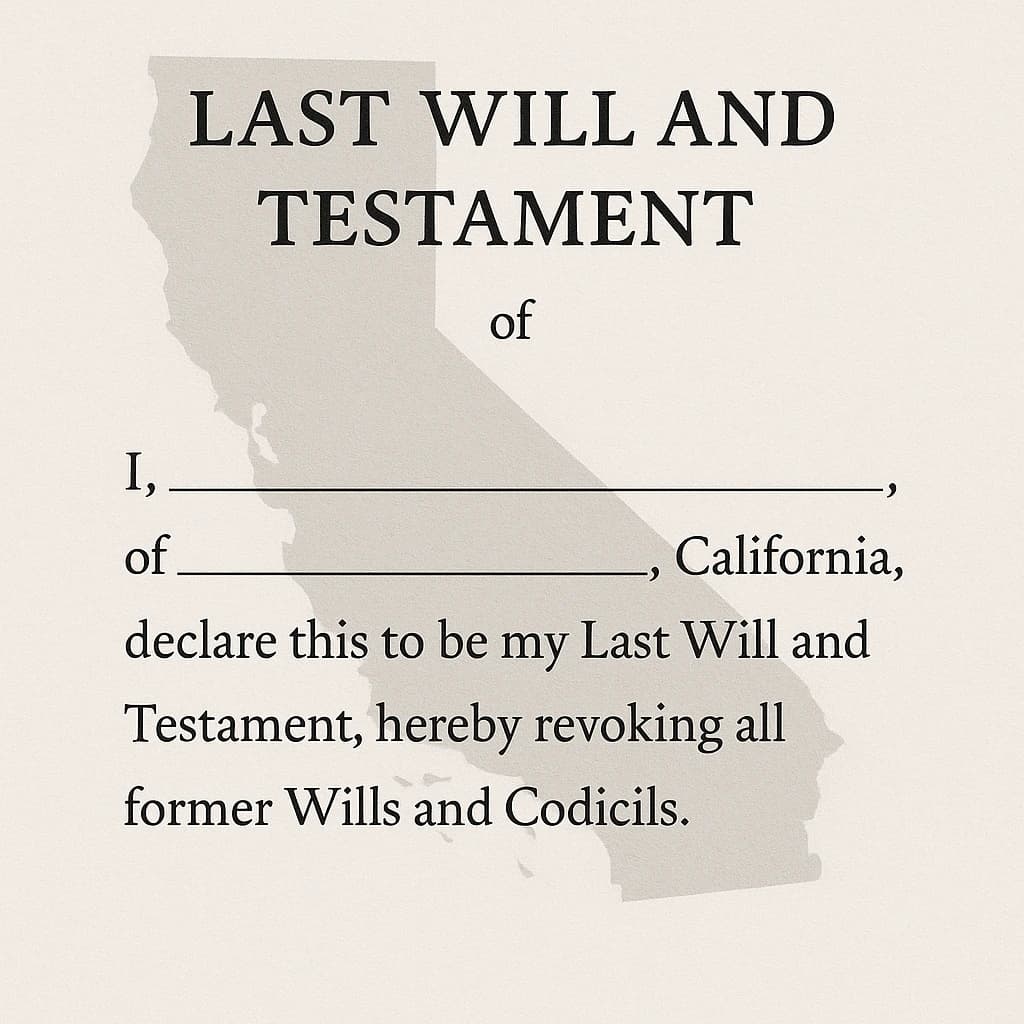
Last will and testament California planning should be simple, safe, and focused on what your family will truly need. For most simple estates, starting with a guided online tool is the smartest approach. The U.S. Will Registry provides a free online will program that walks you through each decision in clear, plain language. You receive a clean draft ready for witnesses, along with built-in options to register your will’s location so it can be found quickly. This step matters because many families never locate an original will when it is needed most. Registration prevents that outcome and protects your intentions.
This guide explains the practical decisions that make your California will work as intended. It covers:
For a straightforward estate, beginning with a guided online will is the most efficient and safest path. The U.S. Will Registry’s free tool avoids blank templates and vague clauses. Instead, you answer structured questions, review a clear draft, and follow a simple checklist to complete the process. As a result, you save time and reduce attorney costs later if professional legal help becomes necessary.
A simple estate usually includes:
For these families, an online will provides a valid and readable document quickly while also integrating will registration so the executor can locate it without delay.
If your estate is more complex, a two-step hybrid plan works best: draft your will online first, then have an attorney refine and finalize it. Drafting online organizes the basics, highlights gaps, and lowers legal fees. An attorney can then add trust language, address tax concerns, and align your plan with business or property needs.
A complex estate may involve:
This hybrid approach combines the clarity of a guided tool with the precision of customized legal support.
Setting up a revocable living trust is more detailed and often requires an attorney. You must select a trustee, draft the trust document, retitle assets, update beneficiaries, and coordinate real estate deeds. You must also maintain the trust over time.
A will, by contrast, is faster and simpler to set up. It lets you organize your wishes, name beneficiaries, and choose an executor. A will is also the best starting point for families who want to document their intentions now and refine them later with legal advice. If your estate grows more complex, you can always add a trust at that time.
In summary:
A trust can avoid probate and help manage complex assets but requires more work and legal assistance.
A will provides an easy, inexpensive starting point that captures essential wishes and prepares you for future planning.
Next, decide who receives each asset. List specific gifts you want certain people to have. Then create a residuary clause that distributes everything else after debts, expenses, and specific gifts. Use clear percentages or shares to avoid confusion. Keep names consistent and include at least one alternate beneficiary for each major gift.
Your executor handles your final affairs, so choose someone organized and dependable. Also name at least one backup. Grant practical powers that allow your executor to manage accounts, sell property, work with advisors, and file taxes. These powers reduce court delays and support faster administration. If appropriate, you may also allow your executor to serve without bond to reduce costs.
Correct signing is essential. Follow California’s witnessing requirements and plan your signing session in advance. Use two adult witnesses who understand they are witnessing your will. Keep all pages together, use consistent dates, and make signatures clear and legible.
Attach a self-proving affidavit whenever possible. This notarized document confirms that you signed voluntarily and that witnesses observed the process. Courts can then validate your will without needing to locate the witnesses years later. This addition reduces delays and minimizes challenges.
START WRITING YOUR FREE LEGAL WILL NOW – The U.S. Will Registry
A will only matters if people can find the original. After signing:
Registration is important because many original wills are never found. Registering records where the will is stored and who to contact so probate can begin immediately. You can register your will quickly through The U.S. Will Registry. If you are searching for another person’s will and cannot locate it, you can try a national lookup tool such as Find a Missing Will.
Finally, share your registration confirmation with loved ones. This prevents confusion and protects your wishes.
Life changes, and your will should reflect those changes. Review your document every few years or when major events occur, such as marriage, divorce, births, deaths, moves, or major property changes. For minor adjustments, use a short amendment. For larger changes, create a new will and revoke all previous versions.
Also check beneficiary designations on life insurance, retirement accounts, and payable-on-death accounts. These designations often override your will, so coordinating them prevents accidental disinheritance.
Start online to create a safe and accurate draft. Sign and witness your will correctly. Attach a self-proving affidavit to avoid delays. Then store and register the will so your family can find it when it matters most. With these steps, your California will becomes clear, enforceable, and ready to protect the people you love.
START WRITING YOUR FREE LEGAL WILL NOW – The U.S. Will Registry
A Last Will and Testament California is valid when the document is written, signed, and witnessed by two competent adults. The signer must be at least 18 and of sound mind. Adding a self-proving affidavit, signed and notarized, helps confirm authenticity and allows the court to process the will without contacting witnesses later.
Yes. You can legally create a Last Will and Testament California online using a guided tool such as The U.S. Will Registry’s free program. It walks you step-by-step through naming beneficiaries, appointing an executor, and including a self-proving affidavit. Once printed, you must sign and witness it according to California law.
Registering your Last Will and Testament California ensures your loved ones can locate it quickly after your passing. Since 67% of wills are lost or undiscovered, registration creates a secure record of your will’s location. The U.S. Will Registry offers free online registration so executors can act immediately and avoid probate delays.
You should review and update your Last Will and Testament California every two years or whenever a major life event occurs, such as marriage, divorce, birth, or property purchase. Regular updates ensure your beneficiaries, executor, and assets reflect your current wishes and keep your estate plan legally enforceable.
This article was reviewed for legal accuracy by Shawn Patrick Wolf, Esq. Mr. Wolf is Board Certified in Wills, Trusts and Estates and in Tax Law. He serves on the Board of Directors of the East Coast Estate Planning Council and the Palm Beach Tax Institute.
