
Find a Death Notice: Reliable Ways to Search Online

← Back
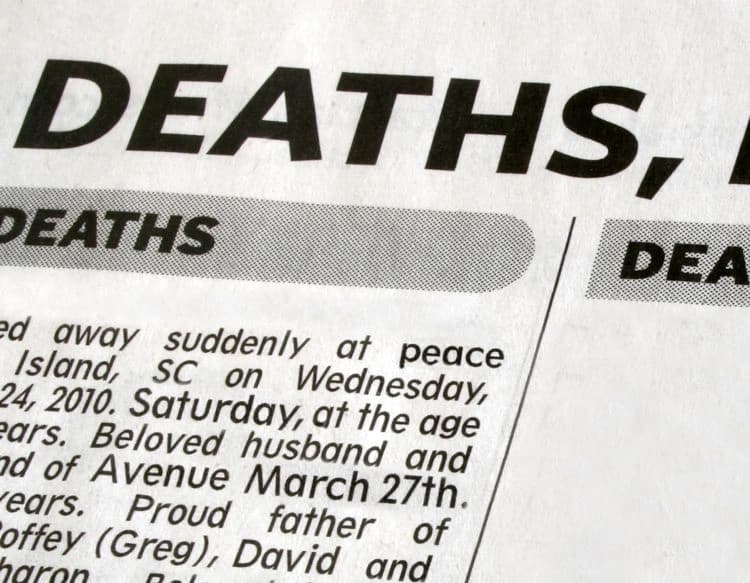
Example of a death notice page with details of a deceased person.

Find a death notice when you need confirmation, clarity, or essential details after someone passes away. Whether you are navigating grief, handling legal or financial matters, or researching family history, locating a death notice often becomes a necessary first step. A death notice does more than announce a passing. It can provide key information about the deceased, funeral or memorial services, surviving family members, and important timelines. In this article, you will learn why death notices matter, how to search for them using reliable sources, and what their discovery can mean for your personal, legal, and historical needs.

Why Finding a Death Notice Matters

First, there are important databases about the family history. The death notice also contains information about the deceased’s family and sometimes even (brief) extended family. So this is of particular use if the state or even federal matters need to be dealt with, such as administering an estate, making an emergency government notification or similar notifications, or any other more comprehensive legal matters. But even apart from these practical things, the death notice can be viewed as a way to commemorate a person who passed away and acknowledge that the individual is no longer living.

For those who enjoy piquing their interest in exploring genealogy, finding death notices would come in handy in making family trees or even tracing family history. It binds the generations and gives a chance to relate to one’s history in a wholesome and treasured manner.

How to Commence Your Search

In the event of specific information like a death notice, the very first point of call is the local newspaper. A lot of people place announcements in local newspapers to let people know the arrangements for the funeral service. In the modern era, most newspapers have digital archives making it possible to access the death notices as they were published several years after the person died.

If you don’t know the specific paper, national and regional databases can be a great help. Such databases are a combination of information from a lot of sources hence giving you a wider view of the matter. Because of this, it becomes a bit easier to locate a death notice if you are not sure about the publication. Obituary Websites like Legacy.com, TheUSWill Registry.org, and other funeral service providers’ websites often store past death notices.

Public Records as a Resource

Death notices can be easily found in public records, which are very useful. Several states also include the record of all the deaths that take place within that state in vital records office. These death certificates or death notices can be obtained through the government office of the last place of residence or place of death of the said person. They lost minimal amounts, but the advantage of obtaining accurate and authoritative details outweighs this cost.

There are other ways to access public records online as well. You can search for a death notification from other states or locations. Normally, these will be accompanied by marriage, birth, or even military records and death records providing more context to the person’s life.

The U.S. Will Registry 

The U.S. Will Registry offers Free Death Notice Searches. You will need only the legal first and last name and date of birth to perform a search. Constraining yourself to these rules makes it easier to find death notice sources when needed. This approach simplifies and enhances the effectiveness of the entire process.

Local Newspapers And Newspaper Archives

Local newspapers remain one of the most common places death notices are published. Even if the print edition is no longer available, many papers maintain digital archives. Some libraries provide free access to historical newspaper databases, which can include death notices going back decades.


Public Libraries And Library Databases

Public libraries often subscribe to newspaper archives, genealogy databases, and historical record collections that are free to library card holders. Librarians can also assist with targeted searches, especially when the exact publication is unknown.


County Coroner Or Medical Examiner Records

In some jurisdictions, coroner or medical examiner offices maintain public death logs or case summaries. These records may confirm a death date and location, which can help narrow where a death notice may have been published.


Probate Court Filings And Estate Notices

When an estate goes through probate, courts often require public notices to be issued. These notices may not be full death notices, but they can confirm the death, identify the executor, and point to related filings. Probate court websites and courthouse records can provide this information.


Church And Religious Institution Records

Many churches and religious organizations publish death notices in bulletins, newsletters, or internal records. If you know the deceased’s place of worship, contacting the church office can sometimes lead to a published notice or memorial record.


Cemetery And Burial Records

Cemeteries often maintain burial registries that are accessible to the public. These records may not be formal death notices, but they can confirm death details and sometimes reference obituary or funeral information.


Social Media Memorial Pages

While not official records, social media memorial posts are increasingly common. Families often share death announcements, service details, and links to published notices on platforms like Facebook. These posts can help confirm dates and lead to official sources.


Military Records And Veteran Databases

For veterans, death notices may appear in military records, VA databases, or veteran organization publications. These records can sometimes include death announcements or references to memorial services.

Genealogy Websites for Family Histories

Genealogy websites like Ancestry.com or FamilySearch.org similarly have good materials to offer. These sites collect such documents as death announcements, obituaries, and death records into one complex. Their intention is to assist people with searching for their family trees. Therefore, they assist in the ease of locating such specialized death notifications from other sources such as ancient newspapers, church records, and even family announcements.

Several genealogy websites have free search options, but there may be some aspects that would need some subscription. Once you come across a death notice in these websites, you will regularly come across other more operational information that will help you look at your family history even deeper.

Funeral Homes as a Biographical Resource

In some cases, we would want to search for a death notice through a direct approach and for this reason, we will need to call the funeral home. Many funeral homes go well beyond just attending to matters concerning the other procedures following a death. Most places keep records and advertise notices on the internet. If you know where the burial occurred, you can request the notice by calling or visiting the funeral home.

Furthermore, some other funeral homes make use of social media or other similar sites to post obituary notices and death announcements. If you need to seek a death notice and have no opportunities to use newspapers or their public archives, obituaries can be very helpful.

To Find Death Notice in Other Countries

When the person for whom you’re looking lived in another country, locating a death notice may take some additional steps. There are standardized processes for recording documents of death notification more so providing public notices. In some countries, education-free churches or authorities may have these records; in some, newspapers or even companies may be the major sources.

So, to locate the death notice out of the country, first try to get in touch with the consulate or embassy. Usually, they will be able to explain to you the procedure for such a country’s citizens. There are online archives or databases where you can search for the country the person according to lived in.

What to Do When You Can’t Find Death Notice Records

Sometimes, no matter how hard you try, you can’t find death notice records. Probably the notice was not published or the records were not computerised. In that case, there are other substantiating documents that you can use, including death certificates, probate records, and even military records.

You may also contact local authorities or funeral homes, and ask about their any available records. Sometimes, family members or friends may have this information, especially where no notice was published.

Conclusion

The role of a death notice is important legally, personally, and in respect of one’s family history. Death notices can help you find information about a deceased relative. They are also useful for historical searches and related tasks. Use local newspapers, public records, funeral homes, genealogy websites, and social media to find the information you need.

Whether for personal or legal reasons, searching for a death notice can offer some level of resolution. This can bring relief to those who are distressed. Efforts to find death notices are not that complicated.  Most people can do it with the right resources. Make the most of the available resources, be it the internet or government documents to perform a thorough search.

Constraining yourself to these rules makes it easier to find death notice sources when needed. This approach simplifies and enhances the effectiveness of the entire process.

How do I find a death notice?

To find a death notice, start with local newspapers in the area where the person lived or died. Many newspapers maintain online archives. You can also search obituary websites, funeral home pages, and public record databases. Social media and family announcements may also provide links to published death notices.

How can I locate a Find a Death notice online?

A death notice can often be found for free through local newspaper websites, public probate court notices, and obituary platforms that allow basic searches without cost. Public libraries and genealogy sites like FamilySearch may also provide free access to historical death notices and related records.

What if I cannot find a death notice?

If no death notice can be found, it may not have been published. In that case, request a death certificate from the state vital records office, contact funeral homes, or review probate filings. Family members or attorneys may also have copies or knowledge of unpublished announcements.

Why do I need a death notice?

A death notice can help confirm a death date, location, and surviving family members, which is often required when handling estates, insurance claims, or government notifications. While it is not a legal document itself, it supports other records like death certificates during probate or administrative processes


Editorial Review:

This article was prepared by estate planning researchers and reviewed by S. Miller and staff. With more than 25 years of experience in estate planning documentation and probate processes, our editorial oversight ensures clarity and accuracy. This content is provided for informational purposes only and does not constitute legal advice.

[View Our Editorial Policy]
