
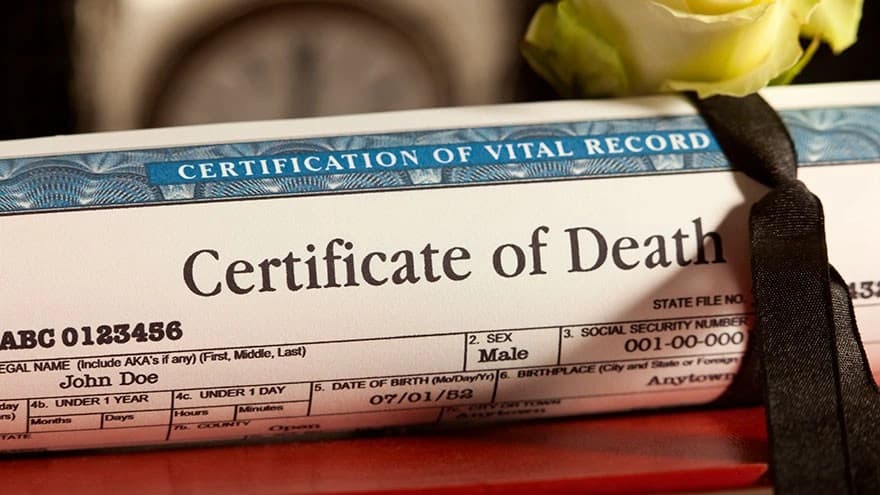
Getting a death certificate copy is usually done through the state or county Vital Records Office where the death occurred. Immediate family members, legal representatives, and other authorized individuals can typically request certified copies by applying online, by mail, or in person, paying the required fee, and providing proof of identity and eligibility.
A certified death certificate is one of the most important legal documents after a person’s death. It is required to settle an estate, claim life insurance benefits, close financial accounts, transfer property, stop government benefits, and begin probate proceedings. Because many organizations require an original certified copy, most families order several copies at the same time.
This guide explains who can request a death certificate, where to apply, what documents are required, how much certified copies typically cost, how long processing takes, and what to do after you receive them.
Before proceeding with the procedure, it is necessary to explain some of the reasons why a death certificate is essential. Each of these uses emphasizes the necessity of promptly getting a death certificate copy.
Each of these uses emphasizes the necessity of promptly obtaining death records in relation to legal and administrative matters following a person’s death.
Receiving certified copies of the death certificate marks the beginning of the estate settlement process. In most cases, the next steps include determining whether the deceased left a will, notifying banks and insurance companies, securing property and financial assets, contacting government agencies, and beginning probate if required by state law. Having several certified copies of the death certificate makes these tasks much easier because many organizations require an official copy before releasing information or transferring assets.
One of the most important early steps is locating the deceased’s will. If family members do not know where it was stored, The U.S. Will Registry’s nationwide Missing Will Search may help determine whether a will was registered and identify where it is being kept or the attorney who prepared it. Finding a will early can save valuable time, help the executor follow the deceased’s wishes, and provide a clear roadmap for settling the estate before additional legal and financial decisions are made.
After receiving the death certificate, consider these common next steps:
Typically, the following categories of persons are allowed to request a death certificate:
Typically, the following categories of persons are allowed to ask and request a death certificate:
Some states may also allow relatives outside the immediate family to request death certificates if there is a reasonable possibility that such request will serve the necessary purpose, for instance, making insurance claims or obtaining genealogical evidence.
In most cases, this depends on the place where the death occurred and where you want to obtain a death certificate. Usually, there is a Vital Records Office in the state or county in which the death took place that you will need to contact. Sometimes, instead of visiting the place of application, you may want to send an application form by email or postal service or, even apply in person. Here’s what you do:
Determine the Method of Submitting the Application for the Death Certificate, if applicable:
In all the three above options of applying whether online, by mail, or in person, an application form has to be filled. This document usually involves:
Relationship Documentation: Proof of your relationship to the deceased, such as a birth certificate, marriage certificate, or legal documents (like a court order) that show your connection.
Legal Authority: If you are not an immediate family member, you may need to provide legal documents like a power of attorney, a court order, or evidence that you are the executor of the estate.
A fee will be charged whenever you make a request for the death certificate. These vary depending on the state or county but they vary between $10 to $25 per death certificate requested
The processing time for a death certificate cannot be stated with certainty since it is variable. Online and in-person usually process faster rate than postal requests. It can be as short as a few days or take as long as several weeks. See the website for the Vital Records Office or County Clerk’s Office to get an approximate date within which your request will be granted.
A death certificate will be sent to the applicant after it has been processed. For the cases when the applicant submitted the request in person, it’s possible to receive the document straight away. Make sure you look over and check the validity of the certificate. In case of any errors in the certificate, it is best to call the office that issued that certificate for rectification.
If you are having problems with where to search for the record we suggest:
If you are not an immediate family member, you must provide additional documentation to request the death certificate. This could include:
Each part of the country or each of the states might have varying demands, thus the importance of seeking state laws.
A death certificate is one of the most important documents needed for various tasks. It is essential for legal and administrative matters related to a deceased person. Follow the steps outlined to collect the necessary documents and decide where to submit your application. Choose how to apply, fill out the form, pay the fee, and understand the processing time. This will help you handle the process effectively.
Correct any omissions or inaccuracies in the application and ensure all dates and purposes are accurate. Further, do not hesitate to consult the Vital Records Office or County Clerk’s Office for assistance if necessary. It can be hard to deal with these issues at such times, but having good information will assist you in dealing with the paperwork more optimally.
After obtaining a certified copy of the death certificate, many families begin completing other important tasks related to settling a loved one’s affairs. One of those tasks may include publishing a death notice or obituary to notify friends, relatives, and the community of the person’s passing.
If you need guidance on writing, posting, or searching for a death notice or obituary, visit The U.S. Will Registry’s Death Notices and Obituaries Resource Center. It provides free information on creating a death notice, understanding the difference between a death notice and an obituary, posting one online, and searching for existing notices.
This article was reviewed for legal accuracy by Shawn Patrick Wolf, Esq. Mr. Wolf is Board Certified in Wills, Trusts and Estates and in Tax Law. He serves on the Board of Directors of the East Coast Estate Planning Council and the Palm Beach Tax Institute.
