

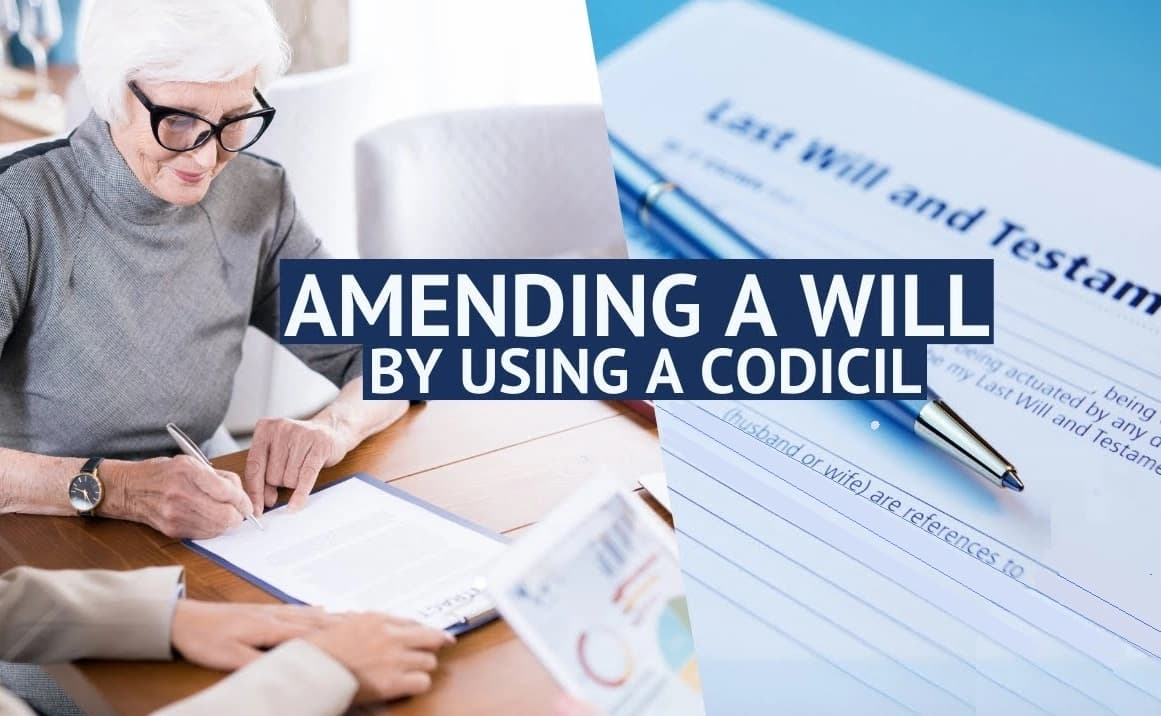
When amending a will for a simple change, you will need a form called a codicil. A codicil gives the option to make alterations without drafting a new will. For example, if you don’t like how your current properties are shared, address these issues in a codicil. If you want to change the structure of family trusts or alter the beneficiaries, a codicil will handle those modifications. You can also wish to use codicils when you want to change the executor or the personal representative of the estate after making the will.
A codicil should be made and executed with the same formalities as the will. It must be in writing, under the authority and direction of the testator (willmaker), and one or more witnesses are required to sign.
For the codicil to be legally sound, certain criteria must be met. First, it must be in writing, dated, and have the testator (will maker) sign it. Additionally, two non-beneficiary witnesses must sign it in the testator’s presence. The codicil should state that it modifies or adds to the will being changed. Codicils are deemed legally binding unless stated otherwise in the codicils signed. The codicil will follow these guidelines to ensure its proper and lawful execution.
Please note that adding several codicils consecutively can also invite a lot of confusion. If that is the case and you want to make certain changes, it would be better to simply make a new will. This way, you will ensure that there are no conflicting interpretations of your wishes. A new will also helps to lessen the burden on the executor in administering the assets under your estate in the event of your death.
When you wish to remove the executor of your will, a codicil can help you with that without writing a whole new document. This tutorial will detail how to use a codicil to remove the executor of the will.
Assessing these advantages and disadvantages will help you determine if amending a will with a codicil or creating a new will is the best option.
Even though codicils exist, other instances may reason for the need to make a new will. Research has established that people do not prefer to add a codicil to the existing will, rather they would prefer writing a new will. It makes it completely easier to put together the estate plan when it comes to creating a new will, which rightfully does away with the problems posed by the addition of several will amendments.
It is now possible to draft your will without any charge due to online will programs on the internet. There are also more affordable options to revise restatements because of online options.
The U.S. Will Registry offers a free, user-friendly online will program, which is a better solution than using a codicil. Too often, other aspects of the will may also need updating, and rewriting the will ensures everything is addressed properly. With online wills, you can take your time and give each item the consideration it deserves.
In summary, amending a will with a codicil is convenient because it allows you to make specific changes without writing a new will. A codicil lets you adjust details like property division, the beneficiaries of a family trust, or the person managing the will, but it doesn’t handle everything at once. It’s important to make sure a codicil is written, signed by the testator, and properly witnessed to be legally valid.
A person can use a codicil to amend a will, but it can be costly and cumbersome if multiple codicils are used over time. Revising the will with too many codicils might become overwhelming. When rigorous changes must be implemented, the formulation of a new will is possibly the most practical and safest option. This strategy eliminates the possibility of misconceptions or legal disputes.
Lastly, decide between a new will or a codicil based on the needed changes and your specific situation. Evaluate your needs and consider consulting an estate planning expert to ensure your estate strategy is effective.
This article was reviewed for legal accuracy by Shawn Patrick Wolf, Esq. Mr. Wolf is Board Certified in Wills, Trusts and Estates and in Tax Law. He serves on the Board of Directors of the East Coast Estate Planning Council and the Palm Beach Tax Institute.
