

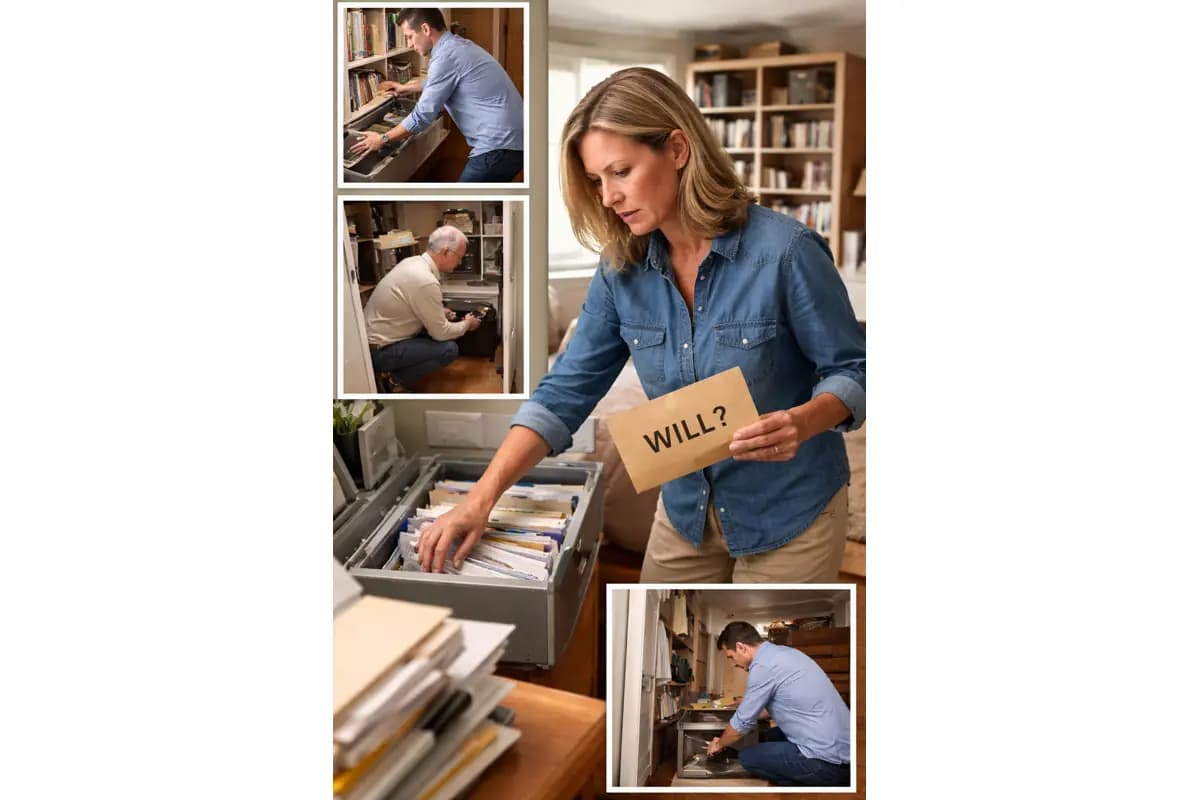
Find a will quickly by starting with a careful and structured search inside the home, where original estate planning documents are most commonly stored. In many cases, a will is not filed with a court before death or held by an attorney, but instead kept in private locations for security and personal control.
Because probate courts rely on the original will to validate the executor and authorize estate distribution, locating the correct document is a critical first step. Families should make every reasonable effort to search thoroughly before assuming a will does not exist. A focused home search often produces the fastest results, reduces legal uncertainty, and helps ensure the estate proceeds according to the deceased person’s documented wishes.
For a complete step-by-step breakdown of every method used to locate a will, including legal, court, and registry searches, refer to How to Find a Will: The Complete Authority Guide.
If the will is not found during your initial search, you should expand your search using a national registry and legal methods.
Start Your Will Search Now → Protect Your Inheritance
Many individuals choose to keep their will at home rather than with a third party. This decision is often based on privacy, convenience, and control.
Some people prefer immediate access to their documents. Others believe a secure place in the home is safer than relying on outside storage. As a result, wills are often placed in locations that feel logical to the owner but may not be obvious to family members.
Understanding how people think about document storage can significantly improve your chances of finding a will quickly.
Start with any filing cabinets or document drawers in the home. Wills are commonly stored alongside:
Look for labeled folders, sealed envelopes, or binders containing estate planning materials. Pay close attention to folders marked “important,” “legal,” or “personal.”
Next, check desks and home office spaces. Many individuals keep critical documents within reach of where they handle financial or business matters.
Search drawers, cabinets, and shelves carefully. Documents may be placed inside envelopes, stacked with bills, or stored beneath other paperwork.
A will is often placed in a fireproof safe or locked document box for protection. These safes may be located in:
If a safe is present, make every effort to access it. Keys, combinations, or instructions may be stored nearby.
Some individuals store important documents inside books, binders, or organized filing systems. A will may be tucked between pages or placed inside a binder with certificates and personal records.
Check:
Review these materials page by page to avoid overlooking hidden documents.
Closets often contain secure boxes or containers used for private records. Look on upper shelves, inside locked cases, or within labeled storage bins. Some have been known to store it in a briefcase under their bed.
People frequently store sensitive documents in areas they consider discreet and protected from everyday access.
Older documents are sometimes moved to long-term storage areas such as attics or basements. These locations may contain boxes of historical paperwork that include estate planning documents.
Search through:
Even if these areas seem less likely, they should not be overlooked.
Many homes have a drawer or cabinet used for essential items such as:
A will may be placed in this type of location for convenience. These drawers are often overlooked during a search, so check them carefully.
Wills are often stored with financial materials. Check areas where you find:
Grouping documents together helps individuals stay organized, but it can also make a will harder to identify during a quick search.
Even a thorough search can fail if certain areas are missed. Families often overlook key locations because they assume the document will be stored in an obvious place.
Common mistakes include:
Taking a methodical approach reduces the risk of missing the will.
When searching inside the home, organization is critical. Move room by room and document what you have checked.
Avoid rushing through the process. Instead, focus on:
A structured approach increases the likelihood of locating the correct document quickly.
If you complete a thorough search of the home and do not locate a will, the next step is to expand your search beyond the residence.
At that point, families should begin exploring professional, legal, and registry-based methods to determine whether a will exists and where it may be stored.
If you are unable to locate a will after completing a thorough and methodical search, it is important to recognize that your responsibility does not end here. Many estates are still properly settled even when a will cannot be found.
At this point, you should turn to our master guide, How to Find a Will: The Complete Authority Guide, which outlines the next steps and explains how to move forward with settling an estate both with and without a will, helping you proceed with clarity and protect the inheritance.
Search for a will by completing a thorough and organized search inside the home before moving on to outside sources. In many cases, the original document is closer than expected. However, it is often placed in locations that are easy to overlook without a methodical approach.
Because the original will determines how an estate is administered, every reasonable effort should be made to locate it. Therefore, searching carefully through filing systems, storage areas, and personal document locations is not only practical but also legally important. In addition, taking the time to check less obvious spaces can prevent delays and reduce uncertainty during the probate process.
As a result, families who approach this process with patience and structure are far more likely to find the correct document. Even so, if the will is not located after a complete home search, the next step is to expand the investigation using professional and registry-based methods.
Ultimately, starting with a focused search inside the home provides the fastest and most effective path toward clarity, allowing families to move forward with confidence and ensure the estate is handled according to the deceased person’s documented wishes.
Find a Missing Will Today→ Protect Your Inheritance
✔ Trusted National Will Registry Since 1997
Start with filing cabinets, safes, and areas where financial records are stored. These locations are the most common places people keep important legal documents. Then expand your search to desks, closets, and storage areas to ensure no documents are overlooked.
Yes, many individuals store their will at home for privacy and convenience. They often choose secure or familiar locations such as safes, filing systems, or personal storage areas where they can access the document when needed.
Kitchen drawers, binders, and storage boxes are often overlooked. Many people keep important documents in informal locations rather than formal filing systems, which can make the will harder to find during a quick search.
Yes, a complete search requires checking every room. Wills may be stored in unexpected places such as closets, attics, or storage bins. A thorough, room-by-room approach increases the likelihood of finding the document.
This article was reviewed for legal accuracy by Shawn Patrick Wolf, Esq. Mr. Wolf is Board Certified in Wills, Trusts and Estates and in Tax Law. He serves on the Board of Directors of the East Coast Estate Planning Council and the Palm Beach Tax Institute.
