
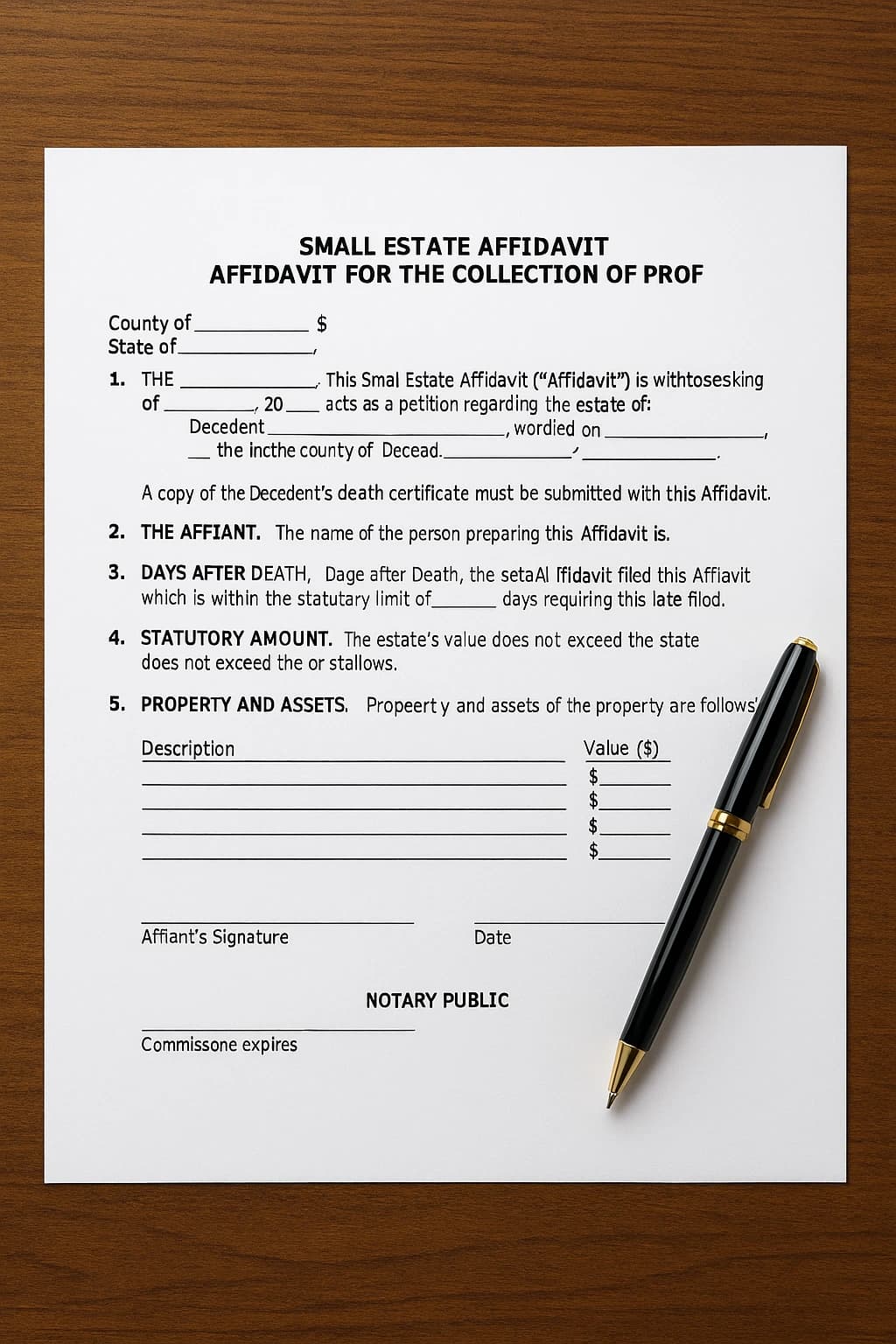
A Small estate affidavit is a legal shortcut many families use to settle an estate without going through full probate. When a loved one passes away, families often face months of paperwork and court processes. However, if the estate is small, you might not need to take on those challenges.
In this blog, you will learn:
Let’s explore how this simple legal tool can save you time, money, and stress.
A small estate affidavit is a legal document used to claim the assets of someone who has died. It works only when the estate meets certain limits set by state law. These limits usually include both the total value of the estate and the type of property left behind.
With this document, you can collect bank accounts, personal belongings, or other assets without going through full probate. This option works best when there is no real estate or large investments involved.
Even when using a small estate affidavit, finding the most recent will remains an important first step. This document does not override a valid will. Instead, it helps transfer assets according to the will’s instructions, if one exists.
By locating the latest will, you can:
Before filing a small estate affidavit, make every effort to locate the most current will. You can start by:
SEARCH FOR A WILL: THE U.S. WILL REGISTRY
Taking these steps protects your loved one’s true intentions and helps you handle the process correctly.
Not every estate qualifies for this process. So, when can you use it? That depends on your state’s laws. However, most states allow it when:
Before filing, check your state’s rules. Each state sets its own limits and requirements. You don’t want to assume you qualify without verifying first.
Typically, the person who files the small estate affidavit is someone entitled to inherit. This could be:
The filer must swear that the information is true. They must also confirm that they have notified other heirs or interested parties.
You might think legal processes are always complicated. Fortunately, this one is not. Here’s how it usually works:
That’s it. You do not have to appear in court. You do not have to file formal probate paperwork. This process saves time and reduces stress for families dealing with loss.
You might wonder, what happens if there is a will? This is an important question. A small estate affidavit can still be used even when the deceased left a will. However, the process works a little differently.
If a will exists, the person filing the affidavit must follow the instructions in that will. The affidavit does not override the will’s terms. Instead, it allows the rightful heirs or beneficiaries named in the will to collect the assets without formal probate.
For example, if the will states that all bank accounts should go to a specific person, the person filing the affidavit must honor that instruction. The small estate affidavit is simply a legal tool to transfer those assets according to the will’s terms.
If no will exists, the person filing must follow state intestacy laws. These laws determine who inherits when there is no legal document.
In both cases, the small estate affidavit helps transfer the assets more quickly and with fewer legal steps.
You might also wonder, how does a small estate affidavit fit into the probate process? The answer is simple—this affidavit helps you avoid formal probate entirely when the estate qualifies.
Normally, probate involves opening a court case, filing paperwork, notifying creditors, and waiting months for approval. That process can be stressful, time-consuming, and expensive.
However, when the estate qualifies as “small” under state law, you can use a small estate affidavit instead of going to probate court. This skips most of the legal procedures.
Sometimes, yes. Probate may still be needed in these situations:
In these cases, you may start with a small estate affidavit but later find you need formal probate if problems arise or the estate doesn’t qualify.
There are many reasons families choose to file a small estate affidavit instead of opening probate. Here are a few:
CLICK HERE FOR A SMALL AFFIDAVIT FORM FOR YOUR STATE
Even though this process is simple, there are a few things to watch out for:
Using a small estate affidavit can help families settle small estates quickly and without the stress of probate. However, you must first confirm that the estate qualifies under your state’s laws. Taking the time to understand the process can save you from unnecessary delays and legal troubles.
If you are not sure whether this option is right for you, consider talking to an estate attorney. They can guide you through the steps and help you protect your loved one’s final wishes.
A small estate affidavit is a legal document that lets families transfer assets from a deceased person without going through full probate. It applies only when the estate meets state-set limits, usually based on value and asset type. This process helps families avoid long court proceedings and settle affairs faster.
You need a small estate affidavit when the estate’s value falls under your state’s limit, no real estate is included, enough time has passed since death, and heirs agree on distribution. Because each state sets its own rules, always check local laws to confirm that the estate qualifies before filing.
Yes. A will does not prevent using a small estate affidavit. However, the person filing must follow the will’s instructions when distributing assets. The affidavit simply streamlines the transfer. If no will exists, state intestacy laws apply. In both cases, the affidavit offers a faster, less complicated way to transfer assets.
A small estate affidavit bypasses formal probate when the estate qualifies as “small.” Instead of months of court paperwork, heirs can collect assets by submitting the affidavit to banks or institutions. This option saves families time, reduces costs, and avoids unnecessary hearings, making it a practical alternative to the probate process.
This article was reviewed for legal accuracy by Shawn Patrick Wolf, Esq. Mr. Wolf is Board Certified in Wills, Trusts and Estates and in Tax Law. He serves on the Board of Directors of the East Coast Estate Planning Council and the Palm Beach Tax Institute.
