

Yes. You can create a will online for free, and it can be legally valid if it meets your state’s requirements for signing and witnessing. Free online wills are generally best for people with straightforward estates who want to name beneficiaries, choose an executor, appoint guardians for minor children, and decide how their property should be distributed.
Online will programs developed with estate planning attorneys have made creating a basic will easier and more affordable. However, people with complex estates, trusts, special-needs beneficiaries, significant business interests, or potential family disputes should consider consulting an estate planning attorney.
Yes. A free online will can be legally valid when it complies with the laws of the state where you live.
The cost of a will does not determine whether it is valid. What matters is whether the document and the way it is executed meet your state’s legal requirements.
Most states require a will to be signed by the person making it and witnessed by two adults. However, requirements vary by state. Therefore, it is important to use a state-specific will program and carefully follow the signing instructions provided with your document.
Many states also allow a self-proving affidavit. This is generally signed before a notary and can make the probate process easier by providing evidence that the will was properly executed.
Online wills are generally best for people with straightforward estates.
A free online will may be appropriate if you want to:
You do not need to be wealthy to need a will.
Parents, homeowners, retirees, young couples, and single adults can all benefit from putting their wishes in writing. Without a valid will, state intestacy laws generally determine who receives property that passes through your probate estate.
A free online will may not be appropriate for a complicated estate.
Consider speaking with an estate planning attorney if you have:
An online will can provide the legal document and instructions. However, it does not replace individualized legal advice when your circumstances require it.
Yes. Many people with more complex estates start with an online will. This allows them to take their time considering important decisions, including beneficiaries, executors, guardians, property distribution, and their overall wishes.
They can then bring the completed will to an estate planning attorney for review. The attorney can address more complex issues, recommend changes, and incorporate additional estate-planning documents or strategies when needed. Starting online can also make the attorney meeting more productive because many of the basic decisions have already been considered.
Creating a will online is generally a simple process.
First, gather the names of your beneficiaries, executor, alternate executor, and guardians if you have minor children. A checklist for writing a will can help you prepare this information.
Next, select your state and complete the online questionnaire. Carefully review the completed document, especially names, beneficiaries, executor selections, guardians, and how the remainder of your estate will be distributed.
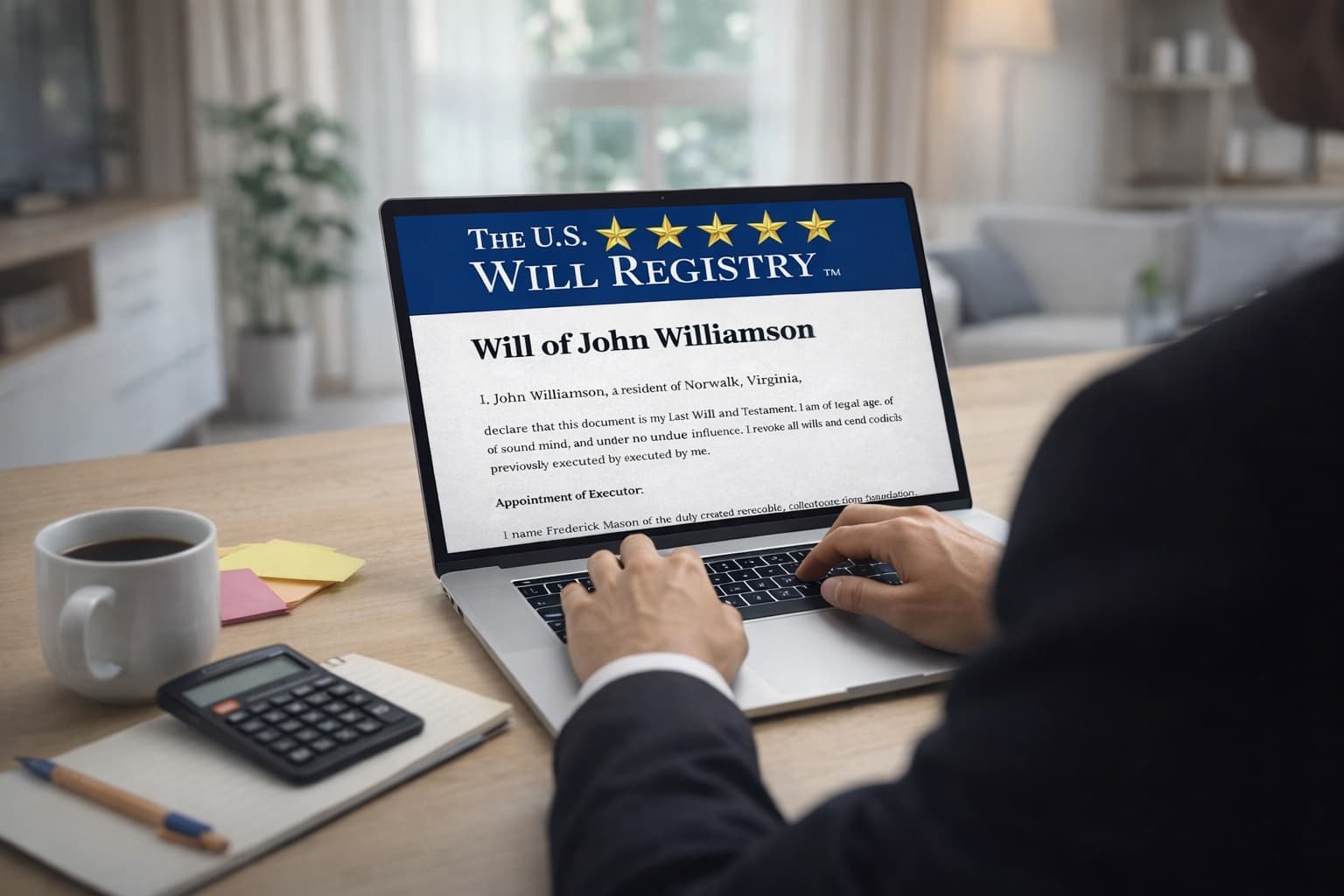
One option is The U.S. Will Registry’s free online will program, which helps people with straightforward estates create a personalized will at no cost.
Finally, follow your state’s instructions for properly signing and witnessing your will.
Do not overlook this last step. Creating the document online does not necessarily complete the legal execution of your will. Following your state’s signing and witnessing requirements is essential.
Creating a will is important. Making sure your family can find it is just as important.
Wills can become difficult to locate over time. People move, attorneys retire, law firms close, and documents get misplaced. Sometimes a will is stored so securely that family members do not know where to look.
That is where will registration can help.
Registering a will creates a record that the will exists and identifies where it can be located. Registration does not make the contents of your will public.
The U.S. Will Registry provides free will registration, allowing you to record the location of your will. This gives family members, executors, and attorneys a way to search for the will if they cannot locate it after your death.
This addresses an important but often overlooked part of estate planning:
A will must not only be properly created. It also needs to be found when your family needs it.
Online will programs have removed two major barriers to estate planning: cost and inconvenience.
In the past, many people believed making a will required an attorney appointment and substantial legal fees. Others assumed they did not own enough property to need one.
Today, free online wills have made basic estate planning more accessible.
Someone with a straightforward estate can create a personalized will from home, review it, print it, properly execute it, and update it when circumstances change.
Most importantly, cost no longer has to prevent someone with a simple estate from putting their wishes in writing.
Yes. Free online will programs allow people with straightforward estates to prepare a will without paying to create the document. You must still follow your state’s requirements for properly signing and witnessing the will.
A will’s validity depends on whether it complies with applicable state law, not how much you paid for it. A properly prepared and executed online will can be legally valid.
Yes. Many people with straightforward estates can make a will without an attorney. Complicated estates or unusual family and financial circumstances may require individualized legal advice.
When someone dies without a valid will, state intestacy laws generally determine who inherits property that passes through the probate estate. The result may be different from what the person would have chosen.
For people with straightforward estates, creating a will online for free can be a simple and practical way to protect their families and put their wishes in writing.
The U.S. Will Registry offers a free online will program developed with estate planning attorneys.
Once your will is completed and properly signed according to your state’s requirements, you can also register your will for free.
CREATE YOUR WILL TODAYIT’S FREE!The U.S. Will Registry▶ START YOUR FREE WILL
Creating your will puts your wishes in writing. Registering it helps make sure your loved ones can find it when they need it.
This article was prepared by estate planning researchers and reviewed by S. Miller and staff. With more than 25 years of experience in estate planning documentation and probate processes, our editorial oversight ensures clarity and accuracy. This content is provided for informational purposes only and does not constitute legal advice.
[View Our Editorial Policy]