

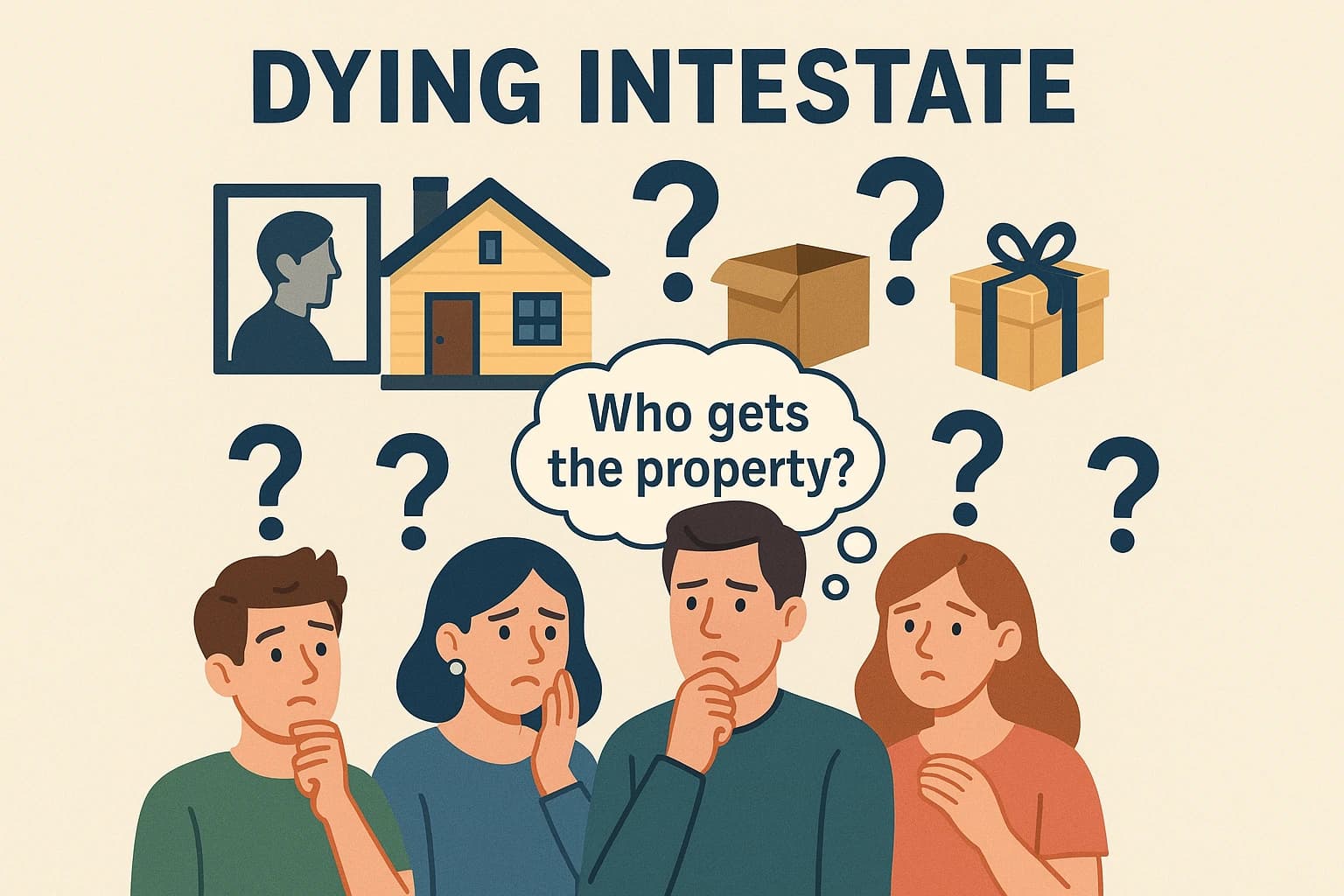
Death without a will means state law—not the deceased person—decides who inherits the estate. When someone dies without a valid will, state intestacy laws determine who receives property by following a legal order of inheritance, usually beginning with a spouse and children. Because these default rules may not reflect the person’s wishes, the outcome can surprise families and lead to unintended results.
Dying without a will can also delay probate, increase legal expenses, and create disagreements among surviving family members. Instead of following written instructions, the probate court must administer the estate according to state law.
Before assuming no will exists, conduct a thorough search. Check the home, office, filing cabinets, safes, and digital records. Contact former attorneys, financial advisors, or estate planners. Many wills are misplaced rather than missing, and locating the original can completely change how an estate is administered.
If you still cannot locate the will, consider searching The U.S. Will Registry. Established in 1997, the Registry helps families determine where a will was stored or identify the attorney who prepared it. It also provides free will registration to help prevent wills from becoming lost in the future.
When there is death without a will, disputes inevitably arise when certain family members believe they should inherit more. Stepchildren and long-term partners may feel excluded. The lack of clear instructions can cause:
The legal term for death without a will is intestacy. When someone has died intestate, state laws—called intestate succession laws—determine who inherits the estate. These laws are specific to each state and may differ widely.
ARTICLE: UNDERSTANDING THE LAWS OF INTESTACY
“Next of kin” refers to those first in line to inherit under the law. This typically includes:
Stepchildren, unmarried partners, and friends rarely inherit under intestacy laws unless specifically named in a valid will. If no legal heirs are found, the estate will “escheat” to the state, meaning the state becomes the owner.
Each state’s intestacy laws have unique rules. For example:
This is why consulting a probate attorney in the state where the person lived—and where property is located—is essential.
HERE ARE STATE GUIDELINES FOR EACH STATE ON INTESTACY
LEARN MORE ABOUT INTESTATE SECCESSION FOR IMMEDIATE FAMILY MEMBERS
Not all property goes through probate, even when there is death without a will. Some assets transfer directly to beneficiaries or co-owners without court involvement. These are called non-probate assets, and knowing which ones apply can save time and reduce legal complexity.
When property is jointly owned, the way it is titled determines what happens at death.
Tenancy by the Entirety or Joint Tenancy with Right of Survivorship – The surviving owner automatically inherits the deceased’s share.
Tenants in Common – Each owner has a separate share. The deceased’s share passes under intestacy laws, not automatically to the co-owner.
Some assets pass directly to the named beneficiary without probate:
If property is held in a living trust, the trustee transfers it to named beneficiaries immediately after death. No probate process is needed for these assets.
ARTICLE: NON PROBATE ASSETS IN SIMPLE TERMS
Other assets—those without a deed, beneficiary designation, or trust—must go through probate. The court appoints a personal representative (administrator) to:
This process can be lengthy, which is why understanding asset type is so important.
When an unmarried person dies intestate, inheritance typically follows this pattern:
Distribution depends on whether the state follows community property or separate property laws.
Community property states – All marital property typically goes to the surviving spouse.
Separate property states – Rules vary:
Even if someone dies without a will, surviving spouses in many states have elective share rights. This means a spouse is entitled to claim a specific portion of the estate—often between one-third and one-half—regardless of intestacy rules.
The elective share is designed to prevent disinheritance. It applies in two main situations:
The percentage and calculation method vary by state. Some states include only probate assets in the calculation, while others consider both probate and certain non-probate assets. To claim an elective share, the spouse must usually file a formal request with the probate court within a limited time—often 6 to 9 months after death.
Failing to act within the deadline can forfeit these rights. For this reason, surviving spouses should seek legal advice immediately after a death to understand both intestacy laws and elective share protections.
CLICK HERE TO SEE LIST OF ELECTIVE SHARE RIGHTS IN EACH STATE
| Feature | Intestate Succession | Elective Share |
|---|---|---|
| When It Applies | No valid will exists. | Spouse receives less than state law guarantees. |
| Purpose | Distributes assets under intestacy laws. | Protects a surviving spouse’s inheritance rights. |
| Who Can Claim | Spouse, children, parents, siblings, and other heirs. | Surviving spouse only. |
| Determines | Who inherits and each heir’s share. | Minimum share the spouse may claim. |
| Amount | Determined by state intestacy laws. | Usually ⅓–½ of the estate. |
| Non-Probate Assets | Usually excluded. | May include an augmented estate. |
| State Variation | Intestacy laws vary by state. | Percentages and deadlines vary by state. |
| Court Action | No. Applied automatically in probate. | Yes. Spouse must file a timely claim. |
Some states treat registered domestic partners the same as married spouses. These include Connecticut, Hawaii, Nevada, Oregon, Vermont, and Washington. In these states, a domestic partner can inherit under intestacy laws.
However, if the couple is not registered, the surviving partner usually receives nothing unless named in a will.
Unmarried couples living together face serious risks when one partner dies without a will.
If no will is found after a thorough search:
The best way to avoid these complications is to create a will now. The U.S. Will Registry offers the most respected, free, and user-friendly online will program in the country. It allows you to:
WRITE YOUR LEGAL FREE WILL NOW WITH: THE U.S. WILL REGISTRY 
Death without a will leaves important decisions in the hands of state law—not the family or the deceased’s own wishes. While intestacy laws aim to distribute assets fairly, they often leave out partners, friends, and stepchildren.
If someone you love has died intestate, act quickly. Search for a will, understand your state’s inheritance rules, and seek legal guidance. Above all, take steps now to ensure your own affairs are in order, so your loved ones never face the stress and uncertainty of navigating life after your death without clear instructions.
The estate is divided under state law. Spouse, kids, or relatives inherit based on legal priority.
State laws decide who inherits when there’s no will, usually starting with spouse, kids, then other family in a set order.
A law letting a surviving spouse claim a set portion of the estate, even if the will leaves them little or nothing.
Yes. State laws usually grant you part or all of the estate, depending on heirs and property type.
This article was reviewed for legal accuracy by Shawn Patrick Wolf, Esq. Mr. Wolf is Board Certified in Wills, Trusts and Estates and in Tax Law. He serves on the Board of Directors of the East Coast Estate Planning Council and the Palm Beach Tax Institute.
