
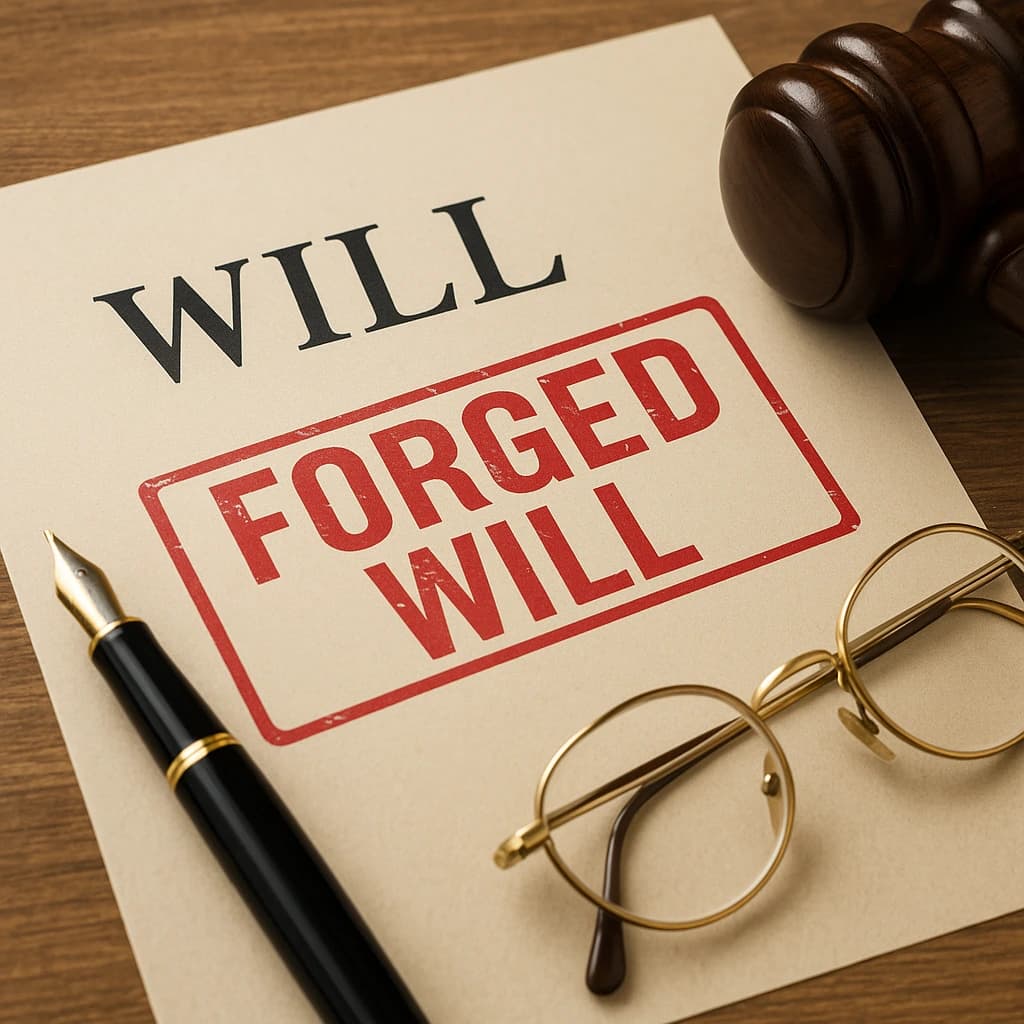
A forged will can tear families apart and destroy the true intentions of the deceased. When someone falsifies a signature, alters the contents of a will, or creates an entirely fake document, the consequences can be devastating. These deceitful acts not only violate the law but also rob rightful heirs of their inheritance.
This article explains how to identify a forged will, how to challenge it in court, and most importantly, how to prevent such fraud from happening in the first place.
A forged will is a legal document that has been falsified to change who inherits the deceased’s property. It may involve fake signatures, altered dates, or even a completely fabricated document.
Forgery can occur in several ways:
In short, a forged will is an act of fraud that invalidates the document and carries severe criminal penalties.
Greed is often the main reason behind a forged will. A dishonest relative, friend, or even a caretaker may believe they deserve a larger inheritance. Others may think they can “fix” what they see as unfair distribution.
Common motives include:
Unfortunately, forged wills usually appear when families are grieving and not immediately alert to inconsistencies. This timing allows the fraudster to take advantage of confusion and delay.
There are several forms of will forgery, each requiring a different approach for detection and proof.
This occurs when someone fakes the testator’s signature. It’s the most common type of forged will. A handwriting expert can usually identify discrepancies in the writing style, slant, or pressure used.
In this case, an entirely different document is presented as the real will. The original might be destroyed, hidden, or replaced with a fraudulent version.
Sometimes a genuine will is changed after signing. This might include adding new beneficiaries, deleting names, or changing bequests. Any unauthorized change after signing invalidates the will.
Witness signatures are critical for legal validation. If witnesses never actually signed or were not present during signing, the will can be declared void.
Detecting a forged will requires careful examination. Here are some warning signs:
If you suspect a forged will, act fast. Contact an estate attorney immediately and preserve all possible evidence, including emails, drafts, and handwritten notes.
Proving a forged will involves demonstrating that the document is not genuine and that the testator did not authorize it. This process can be complex, but several forms of evidence can help.
A handwriting expert can compare the signature on the will with verified samples such as checks, letters, or contracts. Even small variations can reveal forgery.
If the witnesses deny being present or state they never signed the document, it strengthens the claim of forgery.
Forensic specialists can examine ink, paper type, and signatures under magnification to detect tampering or additions.
If the testator was ill, heavily medicated, or mentally incapacitated at the time of signing, that can support a claim that the will was not authentic.
Emails, text messages, or statements showing someone had motive and opportunity to forge the will can also be persuasive in court.
Forgery is a serious crime. Submitting or benefiting from a forged will can result in:
Courts take will forgery seriously. Once proven, the forged will is declared void, and the estate is distributed as if no will existed or based on the last valid version.
During investigations, families often discover the will they suspected was forged is actually just outdated. In some cases, they find that a newer, valid version exists.
Many people who search The U.S. Will Registry uncover that a more recent will was registered by the deceased or their attorney. When this happens, everything changes. The most current will automatically overrides any previous versions, including those already submitted to probate.
If a newer will surfaces, immediately inform your attorney and the probate court. The court will then pause or reopen the case to confirm the newer will’s authenticity and ensure the estate follows the deceased’s most recent wishes.
Performing a missing will search through The U.S. Will Registry before assuming forgery or filing a legal challenge can save families from unnecessary conflict and ensure the correct will is honored.
Click here to search The U.S. Will Registry for a missing will
The best way to prevent forgery is through careful preparation and secure storage. These simple actions can protect your estate and your loved ones.
Use a reputable platform like The U.S. Will Registry. It offers the most respected, user-friendly, free legal online will program in the country. Millions have used it for peace of mind and family protection.
Your will can be created online, printed, witnessed, and safely registered to ensure it is always found when needed.
Registering your will adds an extra layer of security. Through The U.S. Will Registry’s will registration service, families can locate a will even decades later. Registration is free, while searching the national database costs only a nominal fee.
This process ensures that the true, most recent will is found when needed, reducing the risk of a forged will being used.
Inform your executor, attorney, or a trusted family member where your registered will is stored. Transparency makes it harder for anyone to substitute or hide your real document.
Holographic wills (handwritten wills) are easier to forge. Always have two impartial witnesses present during signing, and follow your state’s witnessing requirements.
Keep your will updated, especially after major life events such as marriage, divorce, or the birth of a child. Destroy older versions to prevent confusion or misuse.
If you believe a will has been forged:
Timing is critical. Most states allow challenges only within 30–120 days after probate begins. Once probate closes, reopening the case becomes difficult. However, if clear evidence of forgery or fraud later surfaces, courts can sometimes reopen the estate.
Forgery often succeeds because no one knows where the true will is. By registering the document, you create a permanent record that proves its existence and authenticity.
Since its founding in 1997, The U.S. Will Registry has offered families a trusted way to register and locate wills. The system helps attorneys and individuals protect their documents for future generations. Registering your will eliminates confusion, prevents loss, and deters fraud.
The registry keeps only basic information—such as the testator’s name, date of birth, and the will’s storage location. The actual will remains private. This system ensures confidentiality while allowing families to locate the correct document later.
If a family cannot find a will, they can perform a missing will search for a nominal fee. This step can uncover the true will, preventing a forged or outdated version from being used during probate.
Courts can reopen a settled estate if substantial evidence proves that the will was forged. New evidence, such as a recently discovered registered will or a handwriting expert’s findings, can overturn prior rulings.
However, reopening an estate is costly and time-consuming. Preventive steps like registration and secure storage save families years of emotional distress.
A forged will can devastate families and erase a lifetime of careful planning. Fortunately, today’s technology makes prevention easier than ever. Creating, registering, and safely storing your will through The U.S. Will Registry ensures that your wishes are honored exactly as intended.
Protect your legacy before it’s too late. Register your will for free and encourage your loved ones to do the same. With the right safeguards, no one can alter or fake your final wishes.
A Forged Will is a will that has been altered or faked without the testator’s consent. This includes false signatures, altered pages, or a completely fabricated document. Proving a Forged Will in court requires evidence such as handwriting analysis, witness statements, and forensic document examination.
You can identify a Forged Will by checking for handwriting inconsistencies, missing witnesses, unusual changes in beneficiaries, or altered notarization. If a will appears suspicious, consult an estate attorney and compare it with earlier versions or registered records through The U.S. Will Registry for verification.
If a Forged Will is proven in court, it becomes invalid. The estate is then distributed according to a previous valid will or state intestacy laws. Those involved in creating or presenting the Forged Will may face criminal penalties, including fines or imprisonment for fraud and forgery.
Yes, a Forged Will can still be discovered after probate closes. If new evidence surfaces, such as a registered original will or forensic proof of fraud, the court may reopen the estate. Acting quickly with solid evidence increases the chances of reversing wrongful distributions.
To prevent a Forged Will, always create and register your will through a trusted source like The U.S. Will Registry. Registration secures proof of authenticity and ensures your genuine will can be found later. Avoid handwritten wills, use proper witnesses, and store your will safely to prevent tampering.
This article was reviewed for legal accuracy by Shawn Patrick Wolf, Esq. Mr. Wolf is Board Certified in Wills, Trusts and Estates and in Tax Law. He serves on the Board of Directors of the East Coast Estate Planning Council and the Palm Beach Tax Institute.
