

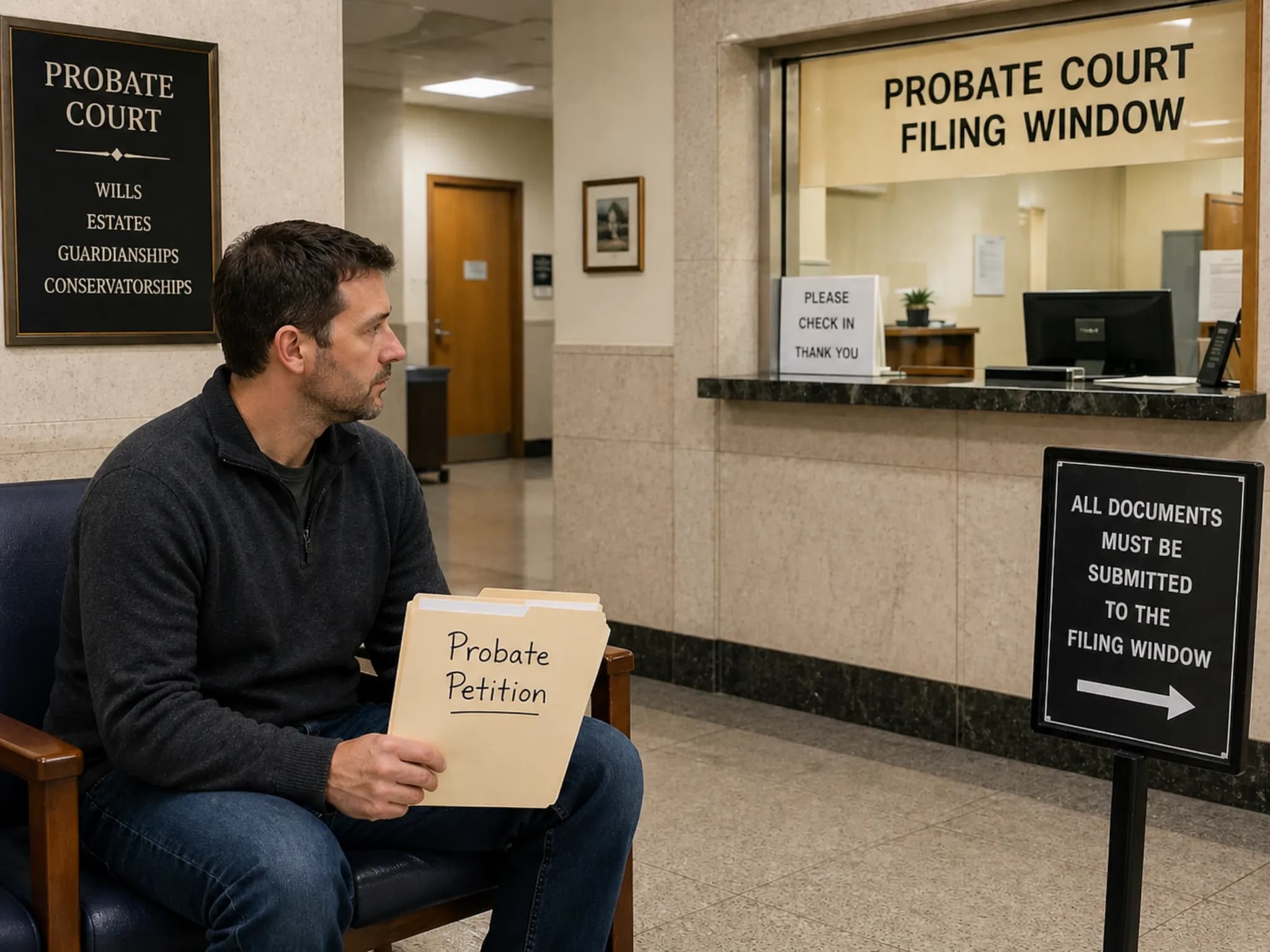
To file a probate petition, submit the required probate forms and supporting documents to the appropriate court where the deceased person lived. The filing commonly includes a certified death certificate, the original will if one exists, information about heirs or beneficiaries, and preliminary information about estate assets. The court then determines whether to appoint an executor or administrator.
Probate procedures vary by state and sometimes by county. Therefore, exact forms, fees, deadlines, and notice requirements depend on the jurisdiction handling the estate.
The U.S. Will Registry has helped families and estate professionals locate information about wills since 1997. Before probate moves forward, an important first step is determining whether the deceased left a will and locating the most recent version.
Although probate procedures vary, most estates follow these basic steps.
Before filing, determine whether the deceased left a will and try to locate the most recent version.
The will may name the executor and identify the beneficiaries who should receive probate property.
If the will cannot be found, families can search for a missing will through The U.S. Will Registry before proceeding as though no will exists.
For additional steps, read How to Find a Will: 6 Steps to Locate a Missing Will.
Probate courts commonly require:
Additional documents may be required depending on state law and local court rules.
The probate petition is generally filed with the appropriate court in the county where the deceased was legally domiciled at death.
Depending on the state, this may be called a probate court, surrogate’s court, circuit court, superior court, or another name.
If the deceased owned real estate in another state, an additional proceeding called ancillary probate may also be required.
Complete the forms required by the court handling the estate.
These forms typically request information about:
Probate forms are not uniform throughout the United States. Always use the current forms required by the specific court.
Submit the completed petition and supporting documents to the appropriate court clerk.
Most courts charge a filing fee. Some allow electronic filing, while others require documents to be submitted in person or by mail.
Check the court’s current requirements before filing.
Depending on the jurisdiction, heirs, beneficiaries, creditors, or other interested parties may need to receive notice.
The court may also schedule a hearing before appointing the executor or administrator.
Once the court approves the appointment, it issues documents establishing the representative’s legal authority.
Depending on the jurisdiction, these may be called Letters Testamentary, Letters of Administration, Letters of Authority, or a similar name.
The executor or administrator can then begin administering probate assets.
For information about what happens next, read Probate Timeline After Filing a Petition: What to Expect.
The exact requirements vary by jurisdiction. However, courts commonly require a certified death certificate, the original will if available, the probate petition, information about heirs or beneficiaries, and preliminary information about estate assets.
Some courts also require affidavits, waivers, notices, bonds, or other supporting forms.
Checking the court’s requirements before filing can help prevent unnecessary delays.
A probate petition is generally filed in the appropriate court in the county where the deceased was legally domiciled at death.
The deceased person’s legal residence may not be the same place where the person died. For example, someone may die while hospitalized in another county or state.
The name of the court also varies by state. Therefore, confirm the correct court before filing.
Probate forms are generally available through the state or county court system.
Depending on the jurisdiction, they may be available from:
Before filing, confirm that you have the current forms, filing fee, and any additional documents required by that court.
A probate petition generally asks for information the court needs to open the estate and determine who should receive authority to act.
This commonly includes:
Incomplete or inaccurate information can delay the proceeding.
When a will exists, the filing generally asks the court to admit the will to probate and appoint the executor named in it.
The court determines whether the will can be admitted under applicable state law. Once appointed, the executor can begin administering probate assets according to the will and applicable law.
For more information, read Wills and Probate: How They Work Together.
Not finding a will is different from knowing that the deceased never made one.
A will may exist even when family members do not know where it was stored or which attorney prepared it. Therefore, reasonable efforts should be made to locate the most recent will before the estate proceeds as though there were no will.
Families can search The U.S. Will Registry for a missing will. A search may help determine whether information about the location of a will or the attorney who prepared it has been registered.
Families can also review personal records, safe-deposit boxes when legally accessible, estate planning files, and information from attorneys who may have assisted the deceased.
For additional guidance, read How to Locate a Missing Will.
If the deceased did not leave a valid will, probate may still be required.
The court may appoint an administrator, and state intestacy laws generally determine who receives probate property.
For more information, read Probate Without a Will.
State law determines who may petition the court to administer an estate.
When a will exists, the named executor generally seeks appointment. If there is no will or the named executor cannot serve, state law determines who has priority to request appointment as administrator.
A surviving spouse, adult child, or another heir may have priority depending on the jurisdiction.
The appropriate filing time depends on state law and the circumstances of the estate.
In many cases, beginning probate promptly helps protect estate property and allows administration to move forward. However, filing deadlines and procedures vary by jurisdiction.
After appointment, the executor or administrator may need to:
The exact responsibilities and deadlines vary by state.
For more information about timing, read How Long Does Probate Take?.
Not always. Many states provide simplified procedures for estates that meet certain requirements.
These may include a small-estate affidavit, summary administration, voluntary administration, or another simplified procedure.
Before filing a standard probate petition, determine whether the estate qualifies for a simplified process under state law.
Common mistakes include:
Reviewing the court’s current filing instructions before submitting the petition can reduce delays.
Filing a probate petition is generally one of the first court steps in formal estate administration.
The process typically involves locating the most recent will, gathering required documents, identifying the correct court, completing the required forms, filing the petition, satisfying notice requirements, and obtaining legal authority to administer the estate.
Because probate procedures vary, always confirm the requirements of the state and county handling the estate.
Most importantly, do not assume that no will exists simply because the family cannot immediately find one. Locating the most recent will before proceeding without one can help prevent complications later.
A probate petition is a legal filing asking a court to begin probate and, when necessary, appoint an executor or administrator. For estates requiring formal probate, it is generally one of the first court filings.
Yes. Probate can proceed when no valid will exists. The court may appoint an administrator, and state intestacy laws generally determine how probate property is distributed.
However, if the family simply cannot locate the will, reasonable efforts should be made to find it before assuming no will exists.
A newly discovered will should generally be brought to the court’s attention. Depending on state law and how far probate has progressed, the will may affect who administers the estate or how probate property is distributed.
In some jurisdictions and circumstances, a person may file probate documents without an attorney. However, complex estates, contested wills, creditor problems, disputes among heirs, or uncertainty about court procedures may make legal assistance advisable.
There is no nationwide timeframe. Timing depends on the court, state procedures, whether a hearing is required, whether the filing is complete, and whether anyone objects.
This article was reviewed for legal accuracy by Shawn Patrick Wolf, Esq. Mr. Wolf is Board Certified in Wills, Trusts and Estates and in Tax Law. He serves on the Board of Directors of the East Coast Estate Planning Council and the Palm Beach Tax Institute.
