

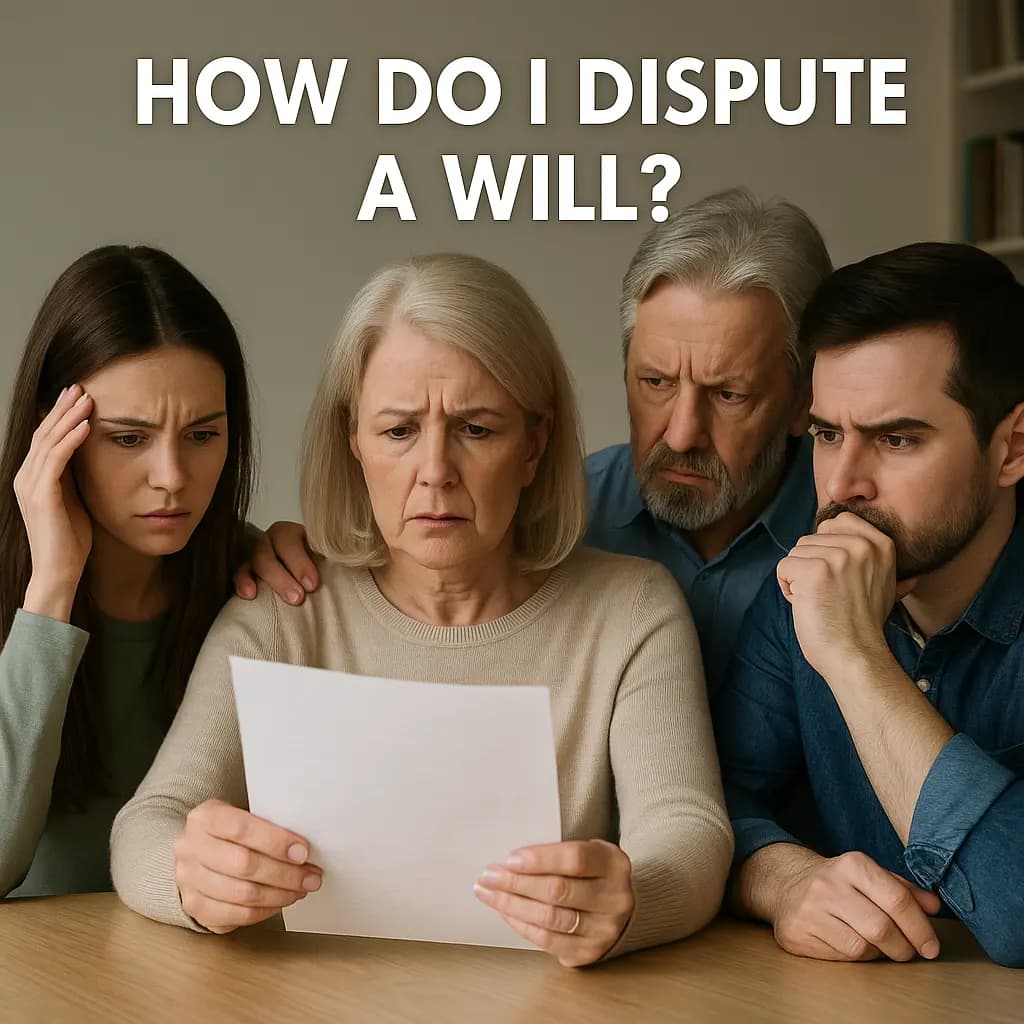
To dispute a will, you generally must file a formal challenge with the probate court handling the estate. You must have legal standing and a valid legal reason for the challenge, such as lack of mental capacity, undue influence, fraud, forgery, improper execution, or the existence of a newer valid will. Because deadlines vary by state and can be short, it is important to act quickly.
Before disputing a will, confirm that you have the correct and most recent version. If a newer will exists, it could change the entire probate proceeding. Learn more in How to Find a Will.
The process for disputing a will varies by state, but it generally involves these steps:
Determine whether you have legal standing. You must be someone whose inheritance or legal rights could be affected by the will.
Obtain the will. If probate has started, you may be able to obtain a copy from the probate court.
Identify legal grounds for the challenge. Being unhappy with an inheritance is not enough to invalidate a will.
Gather supporting evidence. This could include medical records, prior wills, witness statements, communications, or other relevant documents.
File the appropriate challenge with the probate court. The filing requirements and deadlines depend on state law.
Present your evidence. If the dispute is not resolved, the court may hold hearings or a trial to determine whether the will is valid.
Because will contests involve probate law, court procedures, and strict deadlines, consider speaking with a probate attorney in the state where the estate is being administered.
You normally cannot dispute a will simply because you believe it is unfair. A successful will contest generally requires a recognized legal basis.
The person making the will, known as the testator, must have sufficient mental capacity when the will is executed.
Questions may arise when the person had serious cognitive impairment or another condition that affected their ability to understand what they were signing.
However, a medical diagnosis by itself does not necessarily establish that a person lacked testamentary capacity. The applicable legal standard depends on state law and the circumstances when the will was executed.
Undue influence may occur when another person improperly influences the testator’s decisions so that the will no longer reflects the testator’s true wishes.
Concerns may arise when there are sudden or unexpected changes benefiting a caregiver, relative, friend, or other person who had significant influence over the testator.
A will may be challenged if someone forged the testator’s signature or fraudulently caused the person to sign a document.
Fraud may also involve intentionally misleading the testator about the document or circumstances surrounding its execution.
Every state has requirements for executing a valid will. Depending on state law, these can include requirements involving signatures and witnesses.
If those requirements were not followed, the validity of the will may be challenged.
Learn more about what constitutes a valid will.
A more recent valid will may revoke or replace an earlier will.
This is why locating the most recent estate-planning documents can be an important first step before beginning an expensive will contest.
To dispute a will, you generally need legal standing. In simple terms, the outcome of the case must affect your legal or financial interests.
Depending on state law and the circumstances, people with standing may include:
A beneficiary named in the current will
A beneficiary named in an earlier will
A spouse or family member who could inherit under intestacy law
Another interested person whose inheritance would be affected by the validity of the will
Family relationship alone does not automatically mean someone has standing in every case. A probate attorney can determine whether you have the legal right to bring a challenge in your state.
A court needs evidence, not simply suspicion that something was wrong.
The evidence needed depends on the reason for challenging the will. It may include:
Handwriting or signature evidence in suspected forgery cases
For example, someone alleging undue influence might look for evidence showing who controlled access to the testator, who arranged the preparation of the new will, and whether the new document contained significant unexplained changes.
A challenge based on mental capacity would require different evidence.
The deadline to dispute a will depends on state law and the circumstances of the probate proceeding.
In some situations, the period for objecting can be very short. The deadline may also depend on when probate began, when notice was provided, and the type of challenge being made.
Do not assume that you have months or years to decide.
If you are considering disputing a will, check the probate rules in the state handling the estate or speak with a probate attorney as soon as possible.
Yes. If there is reason to believe another will exists, searching for it should be considered before challenging the document currently being probated.
Start with the deceased person’s records, safe-deposit box, attorney, financial adviser, and probate court. You can also search a national will registry.
The U.S. Will Registry has helped attorneys and individuals register the location of wills so they can be found when needed. The Registry does not replace the probate court or determine whether a will is valid. Instead, a registry search may help determine whether information about another will or drafting attorney has been registered.
Finding a newer valid will could significantly affect whether a will contest is necessary and which document should be presented to the probate court.
Once a challenge is properly filed, the parties may exchange evidence and present their positions to the court.
The dispute could result in several outcomes.
The parties may negotiate a settlement. The court may determine that the challenged will is valid. It may invalidate all or part of the will. In some circumstances, an earlier valid will may control instead.
If no valid will remains, some or all of the estate may be distributed according to the state’s intestacy laws.
The exact result depends on the facts of the case and applicable state law.
There is no standard cost for disputing a will.
Potential expenses can include:
A relatively straightforward dispute may cost much less than a contested case involving extensive discovery, expert witnesses, and a trial.
Before proceeding, ask an attorney about the likely cost compared with the amount at issue in the estate.
It may be legally possible to represent yourself in some probate proceedings, but will contests can become complicated quickly.
You may need to comply with strict filing deadlines, rules of evidence, court procedures, and state probate laws. The other beneficiaries or estate may also be represented by attorneys.
For these reasons, someone considering a serious will challenge should generally consult a probate attorney before filing.
Yes. A will dispute does not necessarily have to end with a judge deciding the case after a trial.
Depending on the situation, the parties may consider:
A neutral mediator helps the parties try to reach an agreement. Mediation can sometimes reduce the expense and time involved in litigation.
Beneficiaries and other interested parties may be able to negotiate a settlement. Any agreement must comply with applicable law and probate requirements.
Whether settlement is appropriate depends on the estate, the parties involved, and the strength of the legal claims.
Winning a will contest does not necessarily mean that the person challenging the will receives the entire estate.
The result depends on why the will was invalidated.
A court might recognize an earlier valid will. In other cases, all or part of the estate could pass according to state intestacy law.
The court could also invalidate only a particular provision rather than the entire document, depending on the applicable law and facts.
If the court rejects the challenge, the will being contested may remain in effect.
The person challenging it may also be responsible for their own legal expenses and potentially other costs, depending on state law and the circumstances.
Some wills contain no-contest clauses, which are intended to discourage beneficiaries from bringing certain challenges. Whether these provisions are enforceable, and under what circumstances, varies by state.
This is another reason to obtain legal advice before challenging a will.
Clear estate planning can reduce uncertainty and family disagreements.
Helpful steps may include:
The U.S. Will Registry provides free will registration, allowing individuals and attorneys to record information that can help families locate a will when it is needed.
You generally dispute a will by filing a legal challenge in the probate court handling the estate. You need legal standing, recognized grounds for the challenge, and evidence supporting your claim.
Being excluded from a will does not by itself make the will invalid. You generally need a legal basis for challenging it, such as undue influence, lack of testamentary capacity, fraud, forgery, or improper execution.
People whose inheritance or legal interests would be affected may have standing to challenge a will. This can include certain beneficiaries, heirs, and people named in an earlier will. State law determines who qualifies.
Evidence depends on the grounds for the challenge. Medical records, witness testimony, previous wills, communications, financial records, and expert testimony may be relevant.
The deadline varies by state and may depend on when probate begins or notice is received. Because some deadlines are short, anyone considering a challenge should investigate the applicable deadline immediately.
If you believe a will is invalid, act quickly. First, obtain the will, determine whether you have legal standing, identify a valid legal basis for challenging it, and gather evidence. It is also important to determine whether a newer will exists before beginning a potentially costly court dispute.
Will contests are governed primarily by state law. When significant assets or serious allegations are involved, a probate attorney can help determine whether a challenge is legally justified and must be filed within a particular deadline.
This article was reviewed for legal accuracy by Shawn Patrick Wolf, Esq. Mr. Wolf is Board Certified in Wills, Trusts and Estates and in Tax Law. He serves on the Board of Directors of the East Coast Estate Planning Council and the Palm Beach Tax Institute.
