
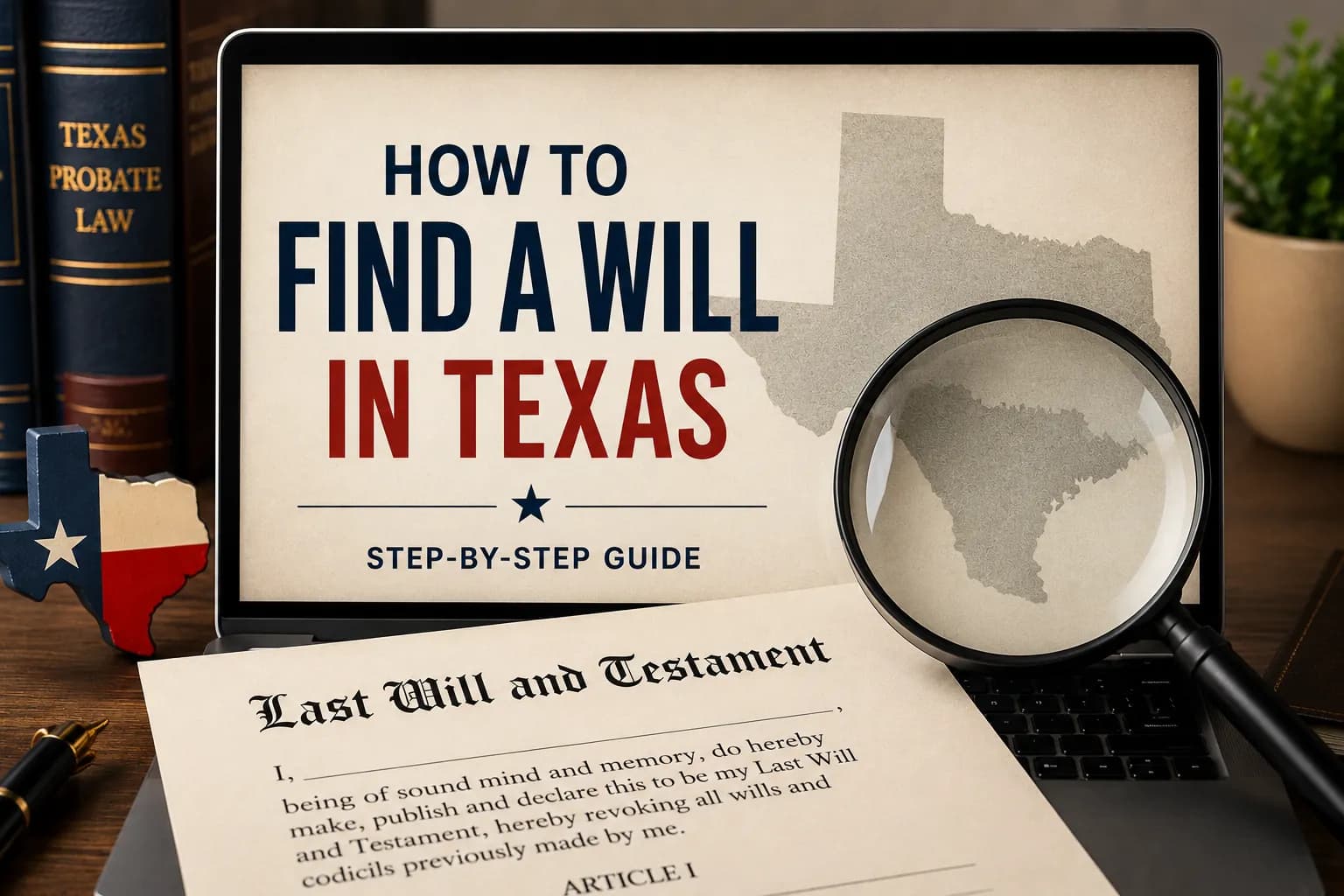
How to find a will in Texas often becomes urgent because Texas probate courts usually require the original signed will before issuing Letters Testamentary to the executor named in the will. If the original cannot be located, Texas law may presume the deceased intentionally revoked it before death. Therefore, families should begin searching immediately after death, especially before probate proceedings begin in the county where the deceased lived.
Texas probate law also contains unique rules involving community property, independent administration, and lost wills. In many Texas estates, wills are connected to ranch property, mineral rights, oil interests, homestead property, or blended family inheritance issues. Because of this, locating the original can quickly and significantly affect who inherits property and how probate proceeds. The U.S. Will Registry was created to help families determine whether a loved one previously recorded where their will was stored or identified the attorney who prepared it. That information can help Texas families move the probate process forward more efficiently and reduce delays when the original will cannot be located immediately.
Texas probate courts strongly prefer the original signed will. If only a copy exists, the court may require additional testimony and evidence before allowing probate to proceed. If no valid will is found, Texas intestate succession laws determine who inherits the estate. Texas inheritance laws can become especially complicated because Texas is a community property state. For example:
Many Texas estates contain assets that are uncommon in other states.
These assets may include:
As a result, finding the original will can greatly affect who inherits these assets.
It can also affect how probate proceeds.
Texas property laws are unique. Therefore, finding the original will early can reduce disputes.
It can also prevent delays and help carry out the deceased’s wishes.
Many Texans still store original wills inside the home rather than with the court. Search:
Additionally, search computers, cloud storage accounts, USB drives, and password managers.
Many Texas families also keep estate documents alongside:
You should also review handwritten notes referencing attorneys, executors, or storage locations.
The U.S. Will Registry helps families determine whether a will location or drafting attorney was previously registered before death. The registry contains will registrations from all 50 states, including Texas. The search process is specifically designed for families trying to locate missing estate planning documents after death.
Contact The Attorney Who Prepared The Will
Texas estate planning attorneys frequently retain copies of wills or records identifying where the original was stored. If the deceased worked with an attorney, contact the office immediately.
Helpful information includes:
If you do not know the attorney’s name, review:
Those records often reveal the attorney or law firm that prepared the estate plan.
Texas probate matters are generally handled at the county level. In some situations, the will may already have been filed with the probate court. Search probate records in counties where the deceased:
Many larger Texas counties provide online probate searches. These include:
If probate was already opened, the will may already be publicly filed.
Texas law does allow certain lost or destroyed wills to be admitted to probate under limited circumstances. However, the person presenting the copy usually must prove:
Texas courts often presume a missing original will was intentionally revoked. Therefore, families may need testimony from witnesses or attorneys familiar with the document. Because these cases can become legally complicated, families often benefit from consulting a Texas probate attorney when only a copy exists.
Texas recognizes handwritten wills, also called holographic wills. The handwritten will generally must:
Witnesses are not always required for handwritten wills in Texas. However, handwritten wills often create probate disputes because:
Families should preserve handwritten documents carefully and avoid writing on them.
Many Texans store wills inside safe deposit boxes. Texas law may allow certain individuals to access the safe deposit box after death to search for estate planning documents. Banks often require:
If the will is believed to be inside the box, families should contact the bank immediately to learn the bank’s procedures.
Texas generally requires probate applications to be filed within four years after death. Waiting too long can complicate probate and increase inheritance disputes. Therefore, families should begin searching for the will immediately after death.
If no valid will can be located, Texas intestate succession laws determine who inherits. Because Texas is a community property state, inheritance outcomes can differ significantly from other states. The outcome often depends on:
As a result, probate can become much more complicated without a valid will.
How to Find a Will: The Complete Authority Guide. Where To Look For A Missing Will. How To Find Out If Someone Has A Will. Can’t Find Original Will. How To Find Out If A Will Was Filed In Court. What Happens When A Will Can’t Be Found.
Finding a will in Texas requires quick action and knowledge of Texas probate procedures. Because Texas inheritance laws involve community property and county-level probate administration, delays in locating the original will can significantly affect probate outcomes. Families should search the home carefully, contact attorneys, review county probate records, inspect safe deposit box procedures, and search The U.S. Will Registry as early as possible. Even when the original will cannot immediately be found, Texas law may still provide options. However, beginning the search quickly gives families the best chance of protecting the deceased’s wishes and avoiding unnecessary probate complications.
This article was prepared by estate planning researchers and reviewed by S. Miller and staff. With more than 25 years of experience in estate planning documentation and probate processes, our editorial oversight ensures clarity and accuracy. This content is provided for informational purposes only and does not constitute legal advice.
[View Our Editorial Policy]