

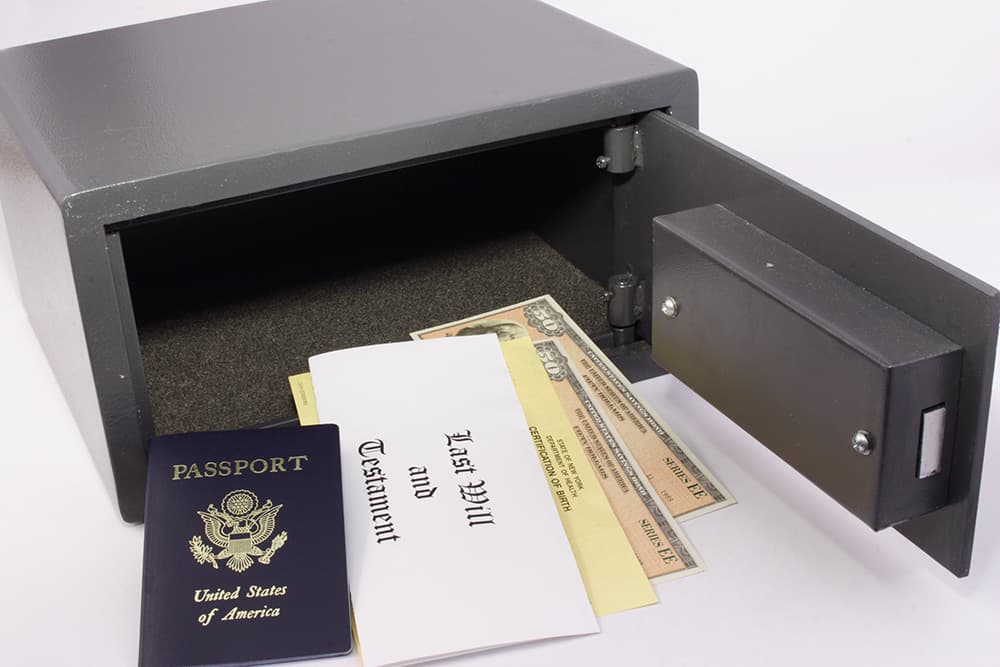
Where to file a Will depends on balancing security, privacy, and accessibility. Common options include an attorney’s office, the probate court, a safe deposit box, a fireproof home safe, online document storage, or a Will Registry. The best choice is one that protects the document while ensuring your executor can easily locate it when needed.
A Will that cannot be found may delay probate, trigger inheritance disputes, or result in assets being distributed under state intestacy laws rather than according to your wishes.
Below are the most common places to file and store a Will, along with the advantages and disadvantages of each option.
If you worked with an attorney to draft your Will, storing it at their office is a natural first step. Most estate planning attorneys maintain secure filing systems, including fireproof safes and secure document storage, specifically for client documents.
There are also some important disadvantages to consider. If your attorney retires, dies, or moves to another law firm, your loved ones may have no idea where your Will is located or who prepared it.
In addition, if you update your Will but leave an older version with your attorney, your estate could be distributed according to an outdated document or, in some cases, under intestate succession laws.
Family disputes may also arise if multiple versions of a Will are discovered.
Learn more: What Happens When Multiple Versions of a Will Are Found
Many states allow people to deposit their Will with the probate court before death. This creates an official location for your executor to search.
Learn more: How to Find a Will in Probate Court
A bank safe deposit box offers excellent physical security and privacy. Many people consider it one of the safest places to store important documents.
The biggest challenge is accessibility.
Many states restrict who may open a safe deposit box after death. Sometimes a court order is required, which can delay probate and estate administration.
If you use a safe deposit box:
Many people keep their Will at home in a locked cabinet, desk drawer, or fireproof safe. This option is convenient and free.
There are several risks associated with home storage.
If you store your Will at home:
Your executor is legally responsible for presenting your Will to the probate court after your death. Therefore, giving them the original document can be a practical solution.
Your executor could pass away before you or become unable to serve.
For this reason:
Learn more: How to Choose an Executor and What are Executor Duties
If the original Will cannot be located, a securely stored duplicate may become extremely important.
Although probate courts generally prefer the original signed Will, a duplicate copy may help establish the deceased person’s intentions and preserve valuable information.
Modern online document storage services offer:
Free Online Will Document Storage: Sidedrawer.com
The primary disadvantage of online storage is that family members may not know which online storage service was used, making it more difficult to locate the document when it is needed.
No matter where you store your Will, registration is the one step that helps ensure it can be found.
Too often, a valid Will exists somewhere, but no one knows where to look. By the time it is discovered, probate may already be complete and assets distributed according to state law rather than the deceased person’s wishes.
REGISTER YOUR WILL – IT’S FREE!
Registration Assures It’s Found!
The U.S. Will Registry is the nation’s oldest and most trusted Will registration service.
When you register:
Learn more: Why Everyone Should Register a Will
An unfound or outdated Will can lead to:
Learn more: What Happens If Someone Dies Without a Will
The U.S. Will Registry offers:
Whether you need to create a Will, update an existing document, or simply ensure your loved ones can find it when needed, the Registry is here to help.
Creating a will online is the easiest way to get started.
It takes minutes and helps protect your family.
Don’t wait. Your family’s peace of mind—and your legacy—depend on it.
To file a Will before death, you may deposit it with a probate court if your state allows it, leave it with your attorney, or store it in a secure location such as a safe deposit box or fireproof safe. Many people also register their Will with a Will Registry to make locating it easier after death.
The best place to file a Will is one that balances security, privacy, and accessibility. Many people choose to store their Will with an attorney or register it with a Will Registry. Others prefer a probate court or a home safe. Whatever option you choose, inform your executor where the document is located.
After someone dies, the executor typically files the original Will with the probate court in the county where the deceased lived. State laws determine the filing deadline and probate procedures. Once filed, the court reviews the Will and oversees the legal process of administering the estate and distributing assets to beneficiaries.
You should store a Will in a secure location where it is protected from damage and can be easily found after your death. Common options include an attorney’s office, a probate court, a safe deposit box, or a fireproof safe at home. Regardless of where you store it, tell your executor its location and consider registering your Will so your loved ones can locate the most current version quickly.
This article was prepared by estate planning researchers and reviewed by S. Miller and staff. With more than 25 years of experience in estate planning documentation and probate processes, our editorial oversight ensures clarity and accuracy. This content is provided for informational purposes only and does not constitute legal advice.
[View Our Editorial Policy]