
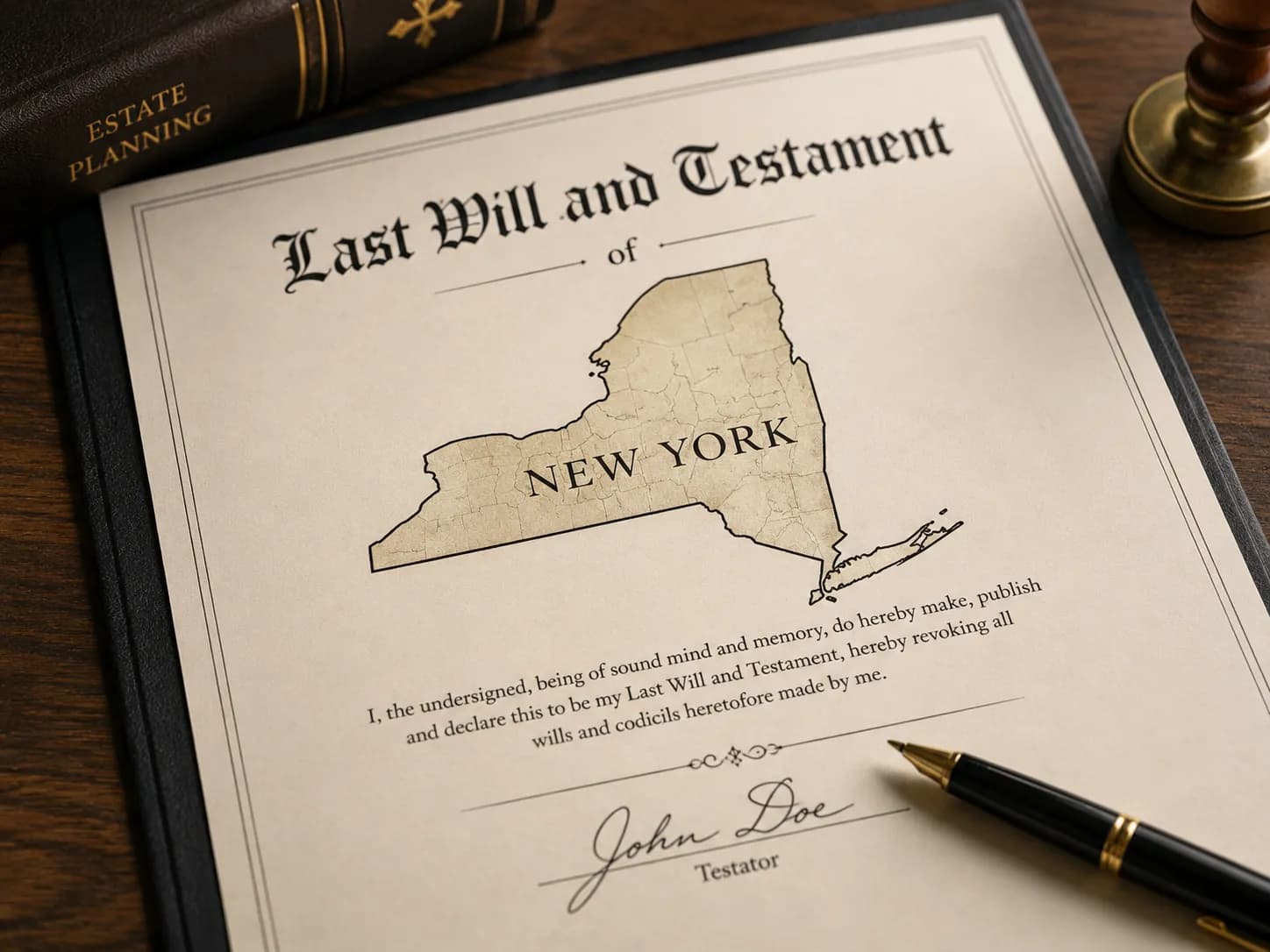
To find a will in New York, search the deceased person’s home, safe deposit box, personal records, email accounts, and digital files. Contact the attorney who prepared the estate plan and ask family members if they know where the will was stored. You can also search The U.S. Will Registry to locate the will or identify the attorney who drafted it. If no will is found, New York inheritance laws may determine who receives the estate.
New York has specific probate laws that affect what happens when a will is found and what happens when it cannot be located. Therefore, families should understand both the search process and the legal procedures that follow. Making every reasonable effort to locate the will may prevent inheritance disputes, probate delays, and unnecessary legal expenses.
As professionals who help families search for wills every day, we recommend starting with the most common locations first. However, New York law also provides court procedures that may help locate estate documents when a will cannot immediately be found.
For a complete guide covering every possible way to locate a missing will, read How to Find a Will: The Complete Missing Will Resource Guide.
A will controls many important decisions.
It often identifies:
• The Executor
• The Beneficiaries
• Guardians For Minor Children
• Charitable Gifts
• Distribution Of Property
• Final Wishes
Without a valid will, New York inheritance laws determine who receives estate assets. Consequently, property may pass differently than the deceased intended. Because of this, families should make every reasonable effort to locate a will before assuming one does not exist.
The search should begin immediately after securing the deceased person’s residence and personal records.
Many original wills are found inside the home.
Additionally, review life insurance policies, trusts, deeds, powers of attorney, and tax returns. These documents often identify the attorney who prepared the estate plan.
Personal records often provide valuable clues when searching for a will. Review the deceased person’s filing cabinets, desk drawers, home office records, and important document folders. Estate planning documents frequently reference the attorney who prepared the will or identify where the original document is stored.
Look for:
• Estate Planning Letters
• Attorney Correspondence
• Legal Invoices
• Engagement Agreements
• Trust Documents
• Powers Of Attorney
• Living Wills
• Advance Directives
• Tax Returns
• Financial Statements
• Insurance Policies
Many people keep their will alongside other important financial and legal documents. Therefore, a thorough review of personal records may help locate the original will or identify the attorney who prepared it. If the will is not found, these records often provide valuable leads for continuing the search.
This content is highly relevant to the search intent and gives Google and AI systems another clear “where to look” section.
Many New York attorneys now provide electronic copies of estate planning documents.
Therefore, review:
• Email Accounts
• Cloud Storage Services
• Computer Files
• Online Estate Planning Platforms
• Digital Document Vaults
Although probate courts generally prefer the original signed will, digital copies often provide valuable information regarding the drafting attorney and the contents of the document.
One of the most successful ways to find a will in New York involves locating the attorney who prepared it.
Search for:
• Legal Invoices
• Attorney Business Cards
• Estate Planning Letters
• Law Firm Emails
• Engagement Agreements
Many attorneys retain copies of wills and records showing where the original document was stored.
The U.S. Will Registry was created to help family members locate where a loved one’s will was stored or identify the attorney who drafted it so probate can proceed according to the deceased’s wishes.
The registry stores will location information rather than the contents of the will itself. Families may search the national database here.Because registrations come from all fifty states, New York families sometimes locate information that leads directly to a missing will.
Many New Yorkers store original wills inside safe-deposit boxes. Unfortunately, banks often freeze access after death. As a result, families may need court authorization before examining the box.
In New York, probate matters are handled by the Surrogate’s Court. If your search has not uncovered a will, contact the probate court, also known as the Surrogate’s Court, in the county where the deceased lived. The court may be able to confirm whether a probate case has been opened or whether a will has already been filed with the court.
The probate proceeding is usually filed in the county where the deceased person lived at the time of death.
Examples include:
• New York County Surrogate’s Court
• Kings County Surrogate’s Court
• Queens County Surrogate’s Court
• Bronx County Surrogate’s Court
• Nassau County Surrogate’s Court
• Suffolk County Surrogate’s Court
The New York State Unified Court System provides probate information and court locations. New York Probate Information.
Finding the will is only the first step. New York law generally requires the original will to be delivered to the appropriate Surrogate’s Court after the testator’s death. The court then reviews the document and determines whether it meets New York’s legal requirements.
Under New York law, a valid will generally must be:
• In Writing
• Signed By The Testator
• Signed By At Least Two Witnesses
• Executed By A Person At Least 18 Years Old
Additionally, witnesses generally must sign within thirty days of each other.
If the court accepts the will, it may issue Letters Testamentary authorizing the executor to administer the estate.
Many families know a will exists but cannot locate the original. When this occurs, New York law provides specific procedures.
The court will first examine whether sufficient evidence exists to prove the will’s existence and contents. If no will can be established, the estate generally proceeds under intestate succession laws.
New York courts often presume that a missing original will was revoked by the deceased before death.
This presumption creates a significant challenge when only a copy exists. However, New York law may still allow probate of a lost will under certain circumstances.
The person seeking probate generally must prove that the:
• Will Was Properly Executed
• Contents Of The Will Can Be Proven
• Original Was Not Revoked
Because lost will proceedings can become complicated, many families seek legal guidance when the original cannot be located.
New York Surrogate’s Court Procedure Act Section 2003 allows an interested party to petition the Surrogate’s Court for permission to examine a deceased person’s safe deposit box when a will may be inside.
The court may authorize:
• Examination Of The Box
• Inventory Of Contents
• Search For A Will
• Search For Burial Instructions
• Search For Insurance Policies
If a will is discovered, the bank generally delivers it to the Surrogate’s Court clerk rather than releasing it directly to family members.
The court often requires:
• Death Certificate
• Petition To Open Safe Deposit Box
• Identification Of The Box Location
• Applicable Filing Fees
Once approved, the court issues an Order to Examine Safe Deposit Box. (48 Hour Probate)
This situation occurs more often than many families realize.
Sometimes a relative, caretaker, or other individual possesses the original will but refuses to produce it.
New York Surrogate’s Court may compel production of estate documents through appropriate legal proceedings.
Therefore, beneficiaries should not assume a will does not exist simply because another person refuses to provide it.
If no valid will exists, the deceased is considered to have died intestate. In that situation, New York inheritance laws determine who receives the estate instead of the deceased person’s wishes. The Surrogate’s Court distributes assets according to New York’s intestate succession laws.
The order of inheritance generally depends on which family members survive the deceased.
The surviving spouse generally inherits the entire estate.
The surviving spouse generally receives:
The children typically share the remaining one-half equally.
The children generally inherit the entire estate in equal shares.
The estate generally passes in the following order:
Important: Because New York’s intestate succession laws may distribute assets differently than the deceased intended, families should make every reasonable effort to locate a valid will before proceeding with estate administration.
Probate is generally required when:
• The Deceased Owned Assets Individually
• The Asset Does Not Have A Beneficiary Designation
• The Asset Does Not Pass By Joint Ownership
• The Asset Requires Court Authority For Transfer
Common probate assets include:
• Real Estate
• Cooperative Apartments
• Bank Accounts Without Beneficiaries
• Investment Accounts Without Beneficiaries
• Business Interests
Finding the will quickly often helps probate begin sooner and reduces delays.
New York offers a simplified estate procedure known as Voluntary Administration.
Families often use this simplified process when personal property is valued at $50,000 or less. Many people refer to it as a Small Estate Proceeding.
Voluntary Administration may allow certain estates to avoid a full probate proceeding. However, eligibility depends on the assets involved and whether a valid will exists.
Because every estate differs, families should review current Surrogate’s Court requirements before proceeding.
After appointment, executors often must:
• Collect Estate Assets
• Notify Beneficiaries
• Pay Valid Debts
• File Tax Returns
• Maintain Estate Records
• Distribute Property
For additional guidance, read Executor of Estate.
How to find a will in New York involves much more than searching a home or filing cabinet. Families need to understand New York probate laws, identify which court handles probate, know how safe deposit box searches work, and understand the legal process when a will cannot be located. Most importantly, families should make every reasonable effort to find the original will before proceeding under intestate succession laws. Taking the time to conduct a thorough search may help families avoid probate disputes, inheritance conflicts, and costly delays.
If no will can be found in New York, the Surrogate’s Court may determine that the deceased died intestate. The court will first consider whether evidence exists proving a lost will’s contents and validity. If no valid will can be established, New York intestate succession laws determine who inherits the estate assets.
Yes. New York law allows interested parties to petition the Surrogate’s Court for permission to examine a deceased person’s safe deposit box. The court may authorize a search for a will, burial instructions, or insurance policies. If a will is found, the bank generally delivers it directly to the court.
New York courts generally presume a missing original will was revoked before death. However, a lost will may still be admitted to probate if sufficient evidence proves it was properly executed, its contents can be established, and the original was not intentionally revoked by the deceased before death.
When a person dies without a valid will in New York, state intestate succession laws control inheritance. A surviving spouse, children, parents, siblings, or other relatives may inherit depending on family circumstances. Because state law may distribute assets differently than intended, locating a will remains extremely important.
This article was prepared by estate planning researchers and reviewed by S. Miller and staff. With more than 25 years of experience in estate planning documentation and probate processes, our editorial oversight ensures clarity and accuracy. This content is provided for informational purposes only and does not constitute legal advice.
[View Our Editorial Policy]