

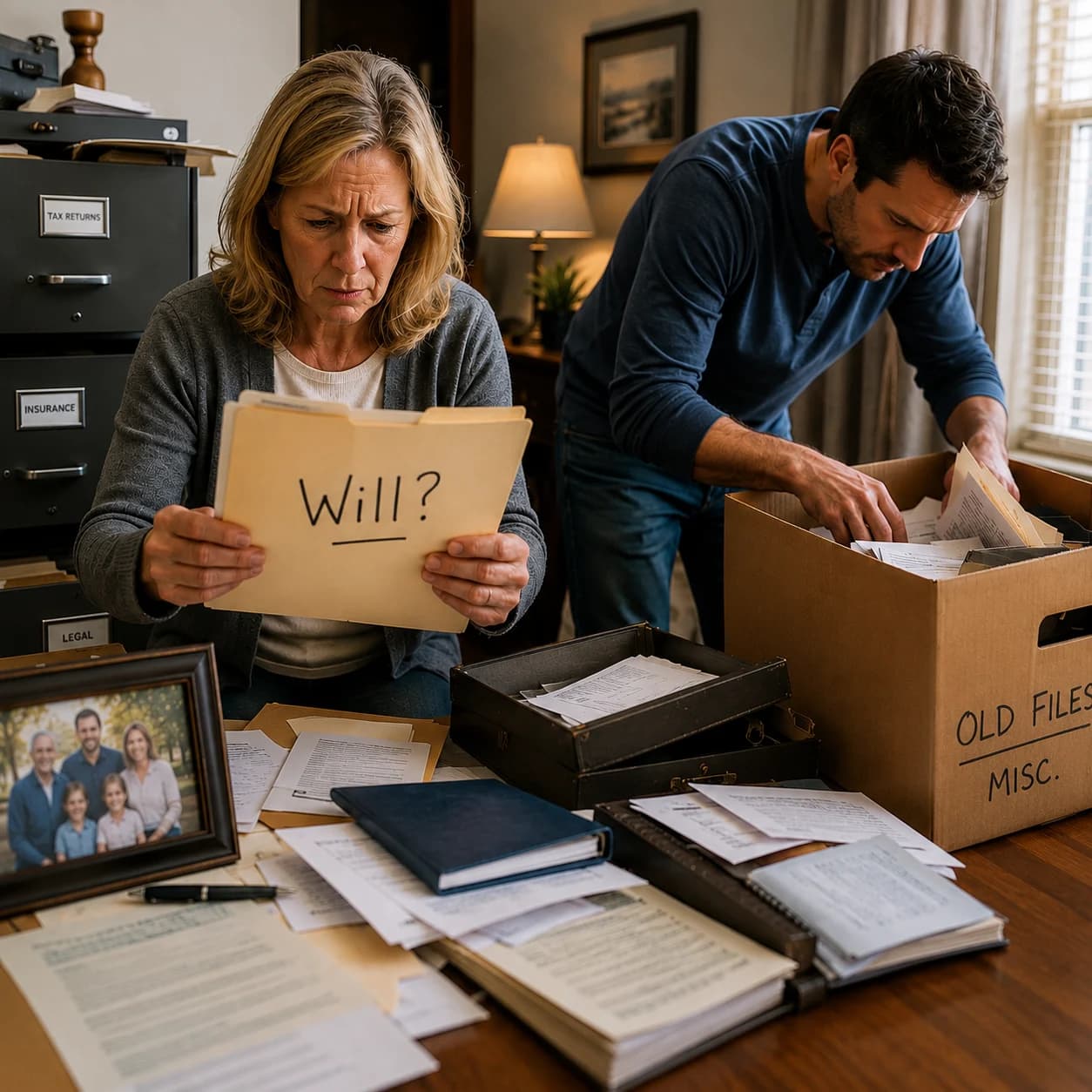
The risks of not registering a will are often overlooked until a family cannot locate the original document after a loved one dies. A missing will can delay probate, increase legal costs, create family disputes, and in some cases result in an estate being administered according to state intestacy laws rather than the deceased’s final wishes. A will only protects your wishes if the people you leave behind can find it when it is needed most.
Since 1997, The U.S. Will Registry has helped attorneys, executors, and families address one of the most overlooked challenges in estate planning—ensuring a will can be located after death. The Registry provides confidential will registration at no cost for both individuals and attorneys because protecting the location of a will should be simple and accessible. Over the years, people move, attorneys retire, law firms merge, and important documents become misplaced or forgotten. The importance of this issue has also been recognized within the legal profession, including coverage in the American Bar Association’s publication, discussed later in this article. This guide explains the risks of not registering a will, why wills become lost, and how registering your will’s location can help protect your final wishes while reducing unnecessary delays, legal costs, and uncertainty for your loved ones.
Registering a will doesn’t mean handing your document over to a third party for safekeeping. A will registry doesn’t store the will itself. Instead, it stores information about where the will is located.
A few things are worth understanding about how registration actually works:
In short, registration solves a locating problem rather than a storage problem. It doesn’t change how your will works legally; it changes whether anyone can find it when it matters. Paired with keeping a secure digital copy of the document itself, registration also protects against the will being unrecoverable if the physical original is ever lost, damaged, or destroyed.
Most people assume their estate plan is airtight the moment the ink dries on the signature page. That assumption tends to rest on a handful of beliefs that don’t hold up as well as they seem to at first glance:
Each of these assumptions can fail quietly, long before anyone notices the gap. An attorney retires and closes the office without notifying former clients. A family relocates, and the paperwork gets left behind in the move. An executor named twenty years earlier passes away before the will’s owner does, taking whatever knowledge they had with them. A house fire, flood, or other disaster destroys the only physical copy that ever existed.
None of these scenarios require carelessness on anyone’s part. They only require the passage of time, and time is the one variable every estate plan eventually has to survive. A will written in your thirties may not be needed until your eighties, by which point circumstances, relationships, and even entire law firms can look completely different.
This is the core problem worth understanding in detail. Without registration, every one of the following risks becomes significantly more likely, and any single one of them can derail an otherwise well-prepared estate plan.
Even a properly drafted, properly executed will disappears every year, simply because no one connected to the deceased knew it existed or where to look for it. Without a record pointing family members in the right direction, a search can stretch on for months. In some cases, wills are never found at all, and the estate proceeds as though the person died without one. If your family is already in this position, How to Find a Will walks through the search process step by step, including where to look and who to contact.
Courts generally need to see a valid original will before proceeding with probate as written. When that original can’t be produced quickly, families often face several compounding problems at once:
What should be a relatively straightforward legal process turns into a drawn-out one, often at meaningful expense to the estate itself. The IRS outlines the general responsibilities that fall to an estate administrator once probate begins, if you’d like a fuller picture of the process.
If a will can’t be located, or its validity can’t be adequately established, some states will treat the estate as though the person died intestate — without a will at all. That means state intestacy laws, not your personal wishes, determine who inherits what. This can produce outcomes wildly different from what you intended, particularly in blended families or situations involving unmarried partners. Learn more about what this actually looks like in Probate Without a Will and What Happens If You Die Without a Will.
Uncertainty tends to invite disagreement, especially during an already emotional time. When there’s no clear record of a will’s existence or location, families can end up dealing with:
A registered will removes much of this ambiguity before it ever has a chance to take root, since there’s a documented, confidential record confirming the will exists and where to find it. For more on how these situations typically unfold, see Inheritance Disputes: Causes, Examples and What to Do.
Not every missing will is lost by accident. It’s a well-recognized problem in probate law that a family member who fears being cut out of a will, or who’s simply unhappy with how assets are divided, can be motivated to make sure that will never surfaces. Wills have been hidden in a closet, quietly thrown away, or destroyed outright by someone who stood to gain from its disappearance, and who was often the very person a grieving family trusted to help locate it. If you suspect this has happened, Can an Executor Hide a Will covers what to do next.
This is exactly the kind of risk registration is built to close off. If a will’s existence and location are on record with an independent third party, no single family member controls whether anyone else finds out it existed. Pairing that registration with a secure digital copy of the document closes the other half of the gap: a house fire, a flood, or a family member acting in bad faith can still destroy the physical original, but it can no longer erase every trace of what the will said. Between the two safeguards, a copy remains findable and recoverable even if the paper original is lost, damaged, or deliberately destroyed — which removes the single point of failure that both accidents and intentional concealment depend on.
Executors are often handed a difficult job with very little information to work from. Without a registration record, they’re stuck locating documents with no clear starting point, tracking down an attorney’s office that may have closed or relocated, and proving the will is valid using whatever fragments of information happen to be available. Registration hands your executor a clear starting point instead of a scavenger hunt. If you’re deciding who should take on this role in the first place, How to Choose an Executor of an Estate covers what to look for.
An unfound will doesn’t just create legal headaches. It means your actual wishes may go completely unfulfilled. Charitable gifts you intended to make may never be given. Guardianship instructions for minor children may never be seen by the court deciding their care. Sentimental items you wanted a particular person to have may be distributed to someone else entirely, or divided according to default legal rules instead of your intentions. Even funeral or burial preferences can be lost along with the document, leaving grieving family members to guess at what you would have wanted.
Consider a fairly ordinary situation. A woman in her forties works with a local attorney to draft a will, naming her sister as executor. The attorney keeps the signed original in a fireproof file cabinet at the office.
Fifteen years pass. She remarries, moves to a different city, and loses touch with the original attorney’s office, which has since merged with another firm under a new name. Her sister knows a will exists in general terms but has no idea which firm holds it now. When she unexpectedly passes away, her family spends weeks calling law firms in her old city, hoping someone recognizes her name in an old client file.
Nothing about this story involves negligence. It’s simply what happens when a legal document depends on institutional memory that erodes over time. A registered will would have given her family a single, confidential place to check.
Wills don’t usually disappear because of one dramatic, memorable event. More often, it’s one of these ordinary, easy-to-overlook situations that quietly cause a document to vanish over time:
Any single one of these situations is common enough on its own. Taken together, they help explain why lost wills are a far more frequent problem than most people initially expect.
Rules vary significantly from state to state, but a few general patterns are worth understanding. Courts generally prefer the original signed document over a copy, since copies raise legitimate questions about whether the will was later revoked or amended. When only a copy exists, the person seeking to admit it to probate typically carries the burden of proving the original wasn’t intentionally destroyed or revoked.
This process can be time-consuming and may require additional hearings or sworn affidavits from people familiar with the will and the circumstances of its disappearance. Outcomes vary by state and by the specific facts involved. If you’re facing this exact situation, Affidavit of a Lost Will Explained walks through the steps many states require before a copy can be admitted. This isn’t legal advice — an estate or probate attorney licensed in your state can walk you through what’s actually required.
No, and this is a common misconception worth clearing up directly. Registering a will doesn’t skip, shorten, or otherwise replace probate. The process is still governed entirely by your state’s laws, regardless of whether your will was registered beforehand.
What registration does accomplish is removing one major obstacle from that process: making sure the will can actually be located and produced once probate begins. That’s a meaningful head start for your family and executor, but it isn’t a substitute for the legal process itself, and it won’t change how long probate typically takes to resolve in your state.
Registration isn’t limited to any one type of estate plan or life stage. It’s worth seriously considering if you fall into any of these groups:
If you’ve gone through the effort and expense of writing a will, registering its location is a small additional step that protects that entire effort, and it costs nothing to do. It’s also worth doing after major life changes — a divorce, a remarriage, a move — even if the will itself hasn’t been revised.
Attorneys have a role here too. Because registration is free for legal professionals as well as the public, many estate planning attorneys register wills on behalf of clients as a standard part of drafting, at no added cost. If your attorney hasn’t mentioned registration, it’s worth asking whether they offer it.
|
Without Registration |
With Registration |
|
Will may be lost or misplaced |
Location is recorded permanently |
|
Family has to search blindly |
Discovery is faster and more direct |
|
Probate can be significantly delayed |
Probate can start without a preliminary search |
|
Legal costs may increase |
Search-related legal costs are reduced |
|
Family faces greater uncertainty |
Family has greater peace of mind |
Getting your will’s location on record involves a few straightforward steps, and most people can complete the process in a matter of minutes.
Step 1: Complete your registration. Provide your basic personal information along with details identifying your will. There’s no fee for this step, whether you’re registering your own will or an attorney is registering it on your behalf.
Step 2: Record where the original is stored. This might be your attorney’s office, a home safe, a bank, or another secure location you’ve chosen.
Step 3: Receive confirmation. Your registration is logged and becomes part of a permanent, searchable, confidential record.
Step 4: Update your registration whenever something changes. If you move the will, revise its contents, or switch attorneys, update your entry promptly so the record stays accurate.
Ready to take this step?
REGISTER YOUR WILLIT’S FREE!Registration Assures It’s FoundSTART HERE →
Is there a fee to register a will?
No. Registration is free, both for individuals registering their own will and for attorneys registering wills on behalf of clients. There’s no subscription, no per-registration fee, and no charge to update a registration later. The service is funded to keep this basic safeguard accessible to anyone who has taken the time to create a will, regardless of their budget.
Can I update my registration later?
Yes. If you move your will, revise your estate plan, or change attorneys, you can update your registration at any time.
How does registration help my family?
It gives your family and executor a clear, reliable starting point instead of an uncertain search. That head start can save time, reduce legal costs, and prevent unnecessary conflict during an already difficult time.
What should I do if I already have a will but haven’t registered it?
Registering an existing will works the same way as registering a new one — you don’t need to rewrite or re-execute anything, and the process takes only a few minutes.
A lost will isn’t a new concern for estate planning attorneys, and it hasn’t gone unnoticed within the legal profession itself. Probate & Property — the magazine published by the American Bar Association’s Real Property, Trust and Estate Law Section — featured an in-depth article on this exact issue in its March/April 2020 issue, titled “Digital Registries Can Make Lost Wills a Problem of the Past.” The piece cited survey data showing that fewer than half of American adults have their estate planning documents in order, and walked through the many ordinary ways a will’s location, or even its existence, can become unknown to family members and attorneys over time.
The article also worked through the ethical considerations attorneys should weigh when using a will registry, including the duties of confidentiality and competence set out in the ABA Model Rules of Professional Conduct, and explained how a properly designed registry can be structured to support those obligations rather than create new risk. It’s a sign that the lost-will problem, and the tools built to solve it, have drawn serious attention from within the estate planning bar, not just from registries themselves.
Registering your will works best as one part of a complete estate planning routine. A few habits reinforce the same goal of making sure your wishes are actually carried out:
For a broader checklist of documents and steps to prepare, the National Institute on Aging’s guide to getting your affairs in order is a helpful companion resource.
Writing a will protects your wishes on paper. Making sure the people you trust can actually find it protects those wishes in practice, when it matters most. The risks of not registering a will — delayed probate, family conflict, unfulfilled final wishes — are all genuinely preventable with one relatively simple step. Once your will is properly executed, take the time to register its location so your entire estate plan works the way you actually intended it to.
Is there a cost to register a will?
No. The U.S. Will Registry provides confidential will registration at no cost for both individuals and attorneys. Registering a will records where the original document is stored—not the will itself—making it easier for executors and family members to locate it after death without paying a registration or update fee.
Is registering a will legally required?
No. No state requires you to register a will. Registration is a voluntary safeguard that does not affect your will’s legal validity. Instead, it creates a confidential record of where the original will is stored, helping your executor and loved ones locate the document more quickly after your death.
Does registering a will make it public?
No. Registering a will does not make your will or its contents public. A confidential will registry records only the existence and location of the original document. Access is restricted to authorized individuals under appropriate circumstances, helping protect your privacy while making the will easier to locate when needed.
Does registration replace storing my original will?
No. Registering a will does not replace proper storage of the original signed document. You should still keep your will in a secure location, such as with your attorney or in a fire-resistant safe. Registration simply records where the original is stored, making it easier for your executor or family to locate.
This article was prepared by estate planning researchers and reviewed by S. Miller and staff. With more than 25 years of experience in estate planning documentation and probate processes, our editorial oversight ensures clarity and accuracy. This content is provided for informational purposes only and does not constitute legal advice.
[View Our Editorial Policy]