
Last updated: August 19, 2026
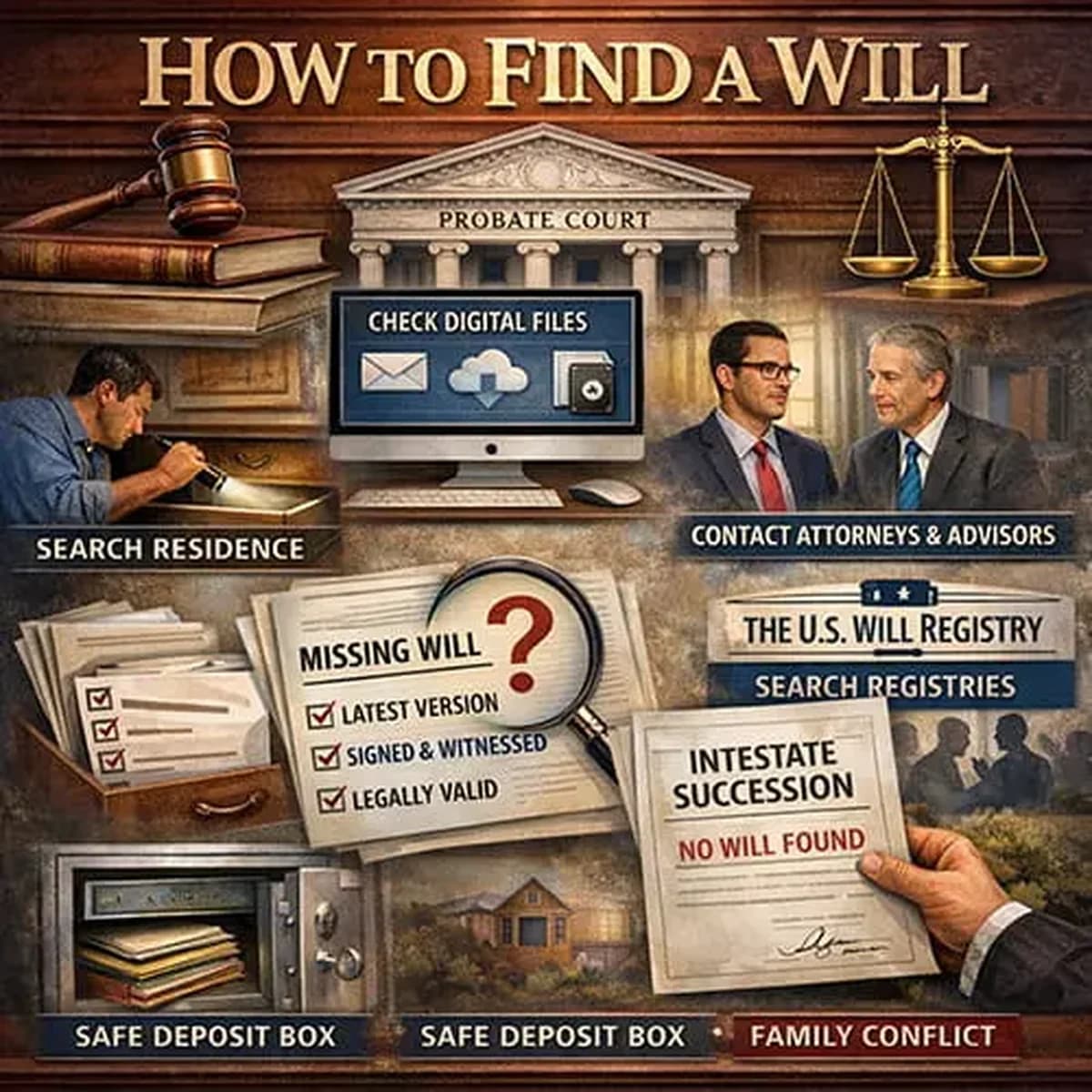
To find a will, start by checking the deceased person’s home and personal files, contacting their estate planning attorney, checking safe deposit boxes, searching probate court records, and searching a national will registry. If one method does not locate the will, continue with the other sources because no single search contains every will.
This guide explains the main ways to find a missing will and where to look next if the will cannot be located.
Check filing cabinets, desks, home safes, fireproof boxes, and other places where important documents were kept. Also look for attorney correspondence, legal invoices, or other records that could provide clues about the will.
For additional places to check, see where to look first when searching for a missing will.
Search accessible email accounts, computer files, cloud storage, and document vaults. Even if you do not find the signed original, digital records may identify the attorney who prepared the will or provide other useful information.
For online search options, see How to Find If a Will Exists Online.
If you know who prepared the deceased person’s will, contact that attorney or law firm. The attorney may have the original will, retain a copy, or know where the document was stored.
If you do not know which attorney prepared it, see How to Find the Attorney Who Wrote a Will.
A national will registry may help identify where a registered will is located or which attorney prepared it.
Search The U.S. Will Registry to determine whether information about the will was registered. The Registry records information about the existence and location of registered wills. It does not store the will itself.
If no matching registration is found, The U.S. Will Registry provides guidance on additional steps that may help continue the search.
For more information about this type of search, see how a National Will Registry works.
5. Check Probate Court Records
If probate has already started, the will may have been filed with the court in the county where the deceased lived. Many probate courts provide online case searches, while others require contacting the court clerk.
If you are trying to determine whether the will has already reached the court, see How to Find Out If a Will Was Filed.
For detailed court-search instructions, see How to Find a Will in Probate Court.
If the deceased had a bank safe deposit box, the original will may be stored there. Contact the financial institution to determine what documentation may be required to check the box after the owner’s death.
For detailed information, see How to Access a Will in a Safe Deposit Box After Death.
If these searches do not locate the will, do not immediately assume that one never existed. A will may exist even if it was never registered or filed with a probate court.
If you have found a copy or other evidence that a will existed but cannot locate the signed document, see what to do when the original will cannot be found.
If no valid will is ultimately located, the estate may have to proceed under state intestate succession laws. See How to Settle an Estate Without a Will for what may happen next.
Finding a will does not necessarily mean the search is finished. A person may have created a later will or signed a codicil that changed an earlier document.
Check the dates and look for later estate planning documents. If you are uncertain whether a document is legally effective, see What Constitutes a Valid Will.
If several copies or versions are discovered, see what may happen when a duplicate copy of a will is found.
Start by checking the deceased person’s personal records and contacting their estate planning attorney. Then search a national will registry and check whether the will has already been filed with the probate court. No single source contains every will, so more than one search method may be necessary.
Sometimes. Probate court databases may contain wills that have already been filed, while a will registry may contain information about a registered will’s location. However, finding no online record does not mean that no will exists.
See How to Find If a Will Exists Online for the available online search methods.
Family members, executors, beneficiaries, attorneys, and others may try to locate a deceased person’s will. However, access to private documents may depend on the person’s relationship to the deceased and their legal authority.
See Who Can Search for a Will for a complete explanation.
There is no single place where every will can be found. A complete search may involve personal records, digital files, attorneys, a national will registry, probate court records, and safe deposit boxes.
Start with the six methods above. If one part of the search requires more information, follow the specialized resources linked throughout this guide.
If you are searching for information about a registered will, search The U.S. Will Registry.
This article was prepared by estate planning researchers and reviewed by S. Miller and staff. With more than 25 years of experience in estate planning documentation and probate processes, our editorial oversight ensures clarity and accuracy. This content is provided for informational purposes only and does not constitute legal advice.
[View Our Editorial Policy]